
Why Is Porsche & Luxury Car Paint So Soft and Thin?
Quick answer: "Soft paint" actually hides two different questions. Chips are a mechanical problem — a stone fractures a thin, brittle clear coat — and depend on paint thickness and impact energy. Swirls and scratches are a surface-hardness problem — a soft clear marrs easily during washing. They have different causes and different fixes, and confusing them is why so much advice…
Key Takeaways
- "Soft paint" actually hides two different questions. Chips are a mechanical problem — a stone fractures a thin, brittle clear coat — and depend on paint thickness and impact energy. Swirls and scratches are a surface-hardness problem — a soft clear marrs easily during washing. They have different causes and different fixes, and confusing them is why so much advice about luxury paint is wrong.
- Porsche's soft-paint reputation is real, but it's a detailer observation, not a published spec. The detailing community very consistently reports that modern Porsches — especially newer cars and darker, heavily-tinted colours — swirl and scratch more easily than the notoriously hard clears on BMW, Mercedes, and Audi. Porsche is the well-known soft exception to the 'German paint is hard' rule of thumb, not proof that all luxury paint is soft.
- Modern clear coats really are thin — an estimated 40 to 50 microns, about the thickness of a sheet of paper — and they've trended modestly thinner over the last twenty years as the industry shifted to waterborne, low-VOC paint for environmental reasons. A paint gauge only reads total film thickness, so any clear-coat-only number is an educated estimate, never a factory spec.
- Thin, soft clear can only be machine-corrected a handful of times before there's too little left to polish safely — each correction removes a few microns. That's why, on soft or thin luxury paint, a sacrificial self-healing PPF layer matters more than on any other car: it takes the chips and marring instead of your irreplaceable factory clear coat. A ceramic coating adds gloss and slickness but does not stop rock chips — only film does.
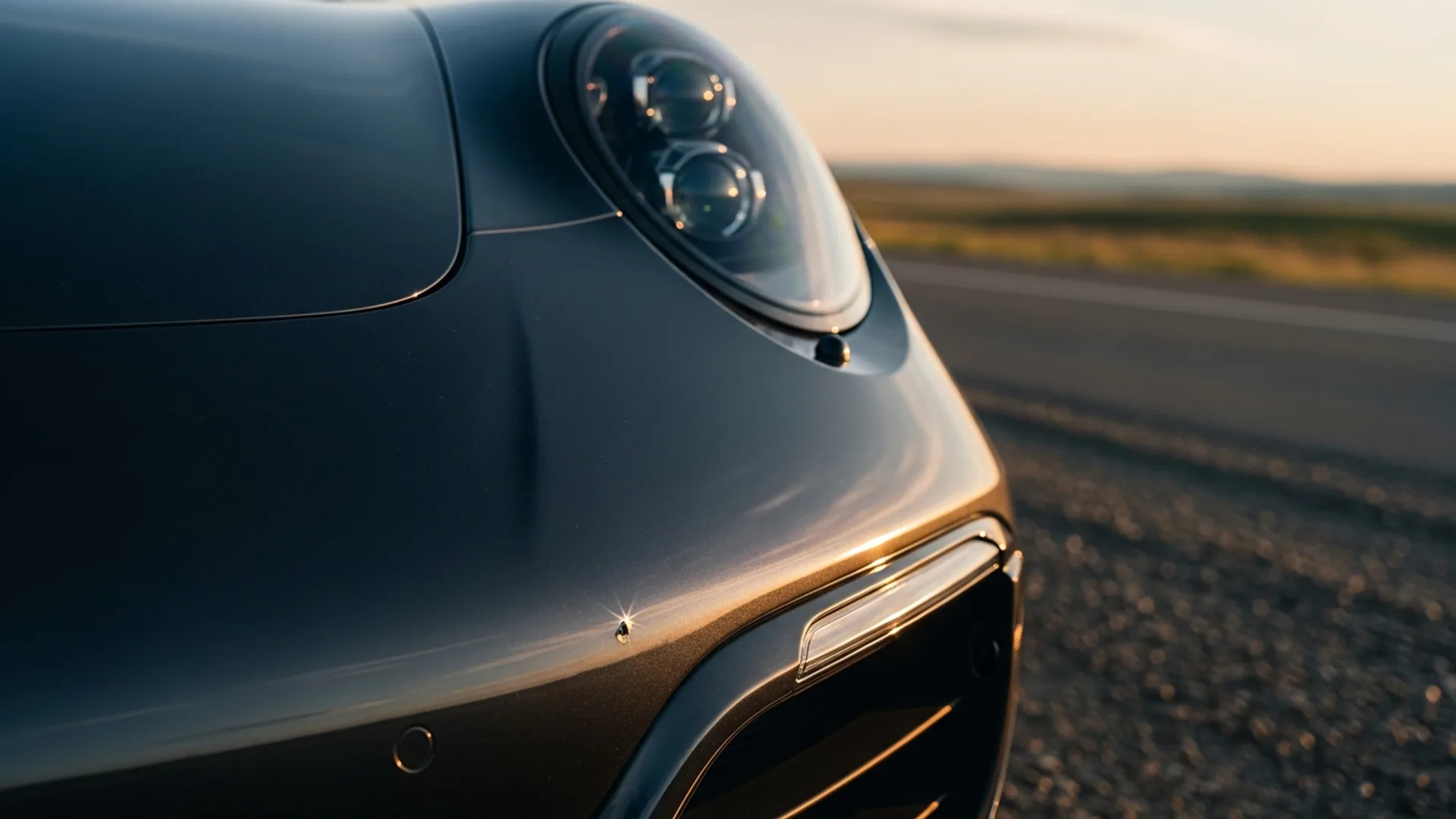
Ask any group of detailers why Porsche paint is so soft, and you'll get instant, unanimous agreement — followed by a dozen theories. The reputation is real: modern luxury and exotic finishes swirl, mar, and chip more easily than owners expect on cars that cost this much. But "soft paint" is a fuzzy phrase hiding two completely different problems, and understanding the difference is the key to protecting a finish that, on these cars, is genuinely irreplaceable.
The short answer: Modern factory paint is thin — the clear coat is an estimated 40 to 50 microns, about the thickness of a sheet of paper — and detailers widely report that the shift to waterborne, low-VOC paint has made many finishes, Porsche's especially, cure softer than they used to. Thin, brittle clear chips when a stone hits it; soft clear scratches when you wash it. Neither a thicker wax nor a ceramic coating stops a rock chip — only paint protection film, a thick self-healing layer, physically absorbs the impact your paint can't.
We hear the frustration constantly at the studio. An owner takes delivery of a flawless 911, Cayenne, or exotic, babies it, and is back within weeks pointing at swirl marks and a fresh chip on the nose, convinced the paint is defective. It isn't. The finish on a modern luxury car is a marvel of colour and depth — but it's also thin, and on some marques soft, and it lives on roads full of gravel. Once you separate the two things people lump together as "soft paint," the whole picture — and the fix — becomes obvious. If the car is brand new, that fix starts with a delivery-day protection plan for a brand-new car.
First, Untangle Two Very Different Problems
Almost every argument about soft luxury paint goes sideways because two separate issues get blended into one phrase. Put simply, "soft paint" is really two different problems: rock chips (a thickness-and-impact problem) and swirls (a surface-hardness problem). Pull them apart and everything clarifies.
A rock chip is a mechanical impact problem. It's governed by how thick and how brittle the paint is, plus the energy of the stone hitting it. When a pebble strikes a thin, relatively brittle clear coat at 100 km/h, the clear fractures and a fleck pops out — right down to the base coat or metal. Thickness and impact decide chips. Polishing does nothing for them: once a chip is there, it's a touch-up or a respray, not a buff — and if film is going on afterwards, how long touch-up paint must cure before film can cover it turns out to be an unpublished number.
A swirl or scratch is a surface-hardness problem. That's about how well the clear coat resists marring — the fine abrasion from wash mitts, towels, automatic car washes, careless contact, and a car cover pulled over a panel that wasn't clean first. Soft clear scratches more easily here. This is the damage paint correction actually fixes, by levelling the clear coat back to a uniform gloss.
Here's the tension that ties them together: paint engineers have to balance hardness against flexibility. Make a clear coat harder and it resists swirls but becomes more brittle and chip-prone; make it softer and more flexible and it shrugs off some impacts but marrs more easily when you wash it. There is no finish that wins on both. So "is this paint good or bad?" is the wrong question — the right one is "which way does this car lean, and how do I protect against its weakness?"
| Rock Chips | Swirls & Scratches | |
|---|---|---|
| Root cause | Mechanical impact from a stone | Surface abrasion / marring |
| Depends on | Paint thickness + brittleness + stone speed | Clear-coat hardness (mar resistance) |
| Where it happens | Front bumper, hood edge, mirrors | All over — mostly from washing |
| Can it be polished out? | No — touch-up or respray only | Usually yes — that's what correction does |
| What actually prevents it | Paint protection film (impact layer) | Safe washing + ceramic slickness |
Why Modern Paint Really Is Thin
Start with the numbers, because they surprise people. The entire paint system on a modern car — primer, colour base coat, and clear coat stacked together — is typically only about 100 to 150 microns thick, or 4 to 6 thousandths of an inch. The clear coat doing all the protecting is an estimated 40 to 50 microns of that: roughly the thickness of a sheet of paper, or a human hair. That's the only barrier between a flying stone and your colour.
Clear coats have also trended somewhat thinner over the past two decades — a modest reduction, on the order of 10 to 20 percent, driven by material cost, efficiency, and tightening environmental rules. It's not the dramatic collapse some forum posts claim, but the direction is real, and it leaves less margin than the paint on a car from the 1990s.
Approximate Film Thickness — Why Paint Has So Little to Give
A Note on the Numbers
A detailer's paint-depth gauge reads the total film thickness over the metal as a single number — it can't isolate the clear coat. So any "your clear coat is X microns" figure is an educated estimate, not a manufacturer spec; automakers don't publish per-layer clear-coat thicknesses. The figures here are consistent industry rules of thumb, not exact stats for your specific VIN. What isn't in doubt is the relationship that matters: the clear coat is astonishingly thin, and quality film adds more thickness than the entire factory finish it's protecting.
The Waterborne Shift: Why "Softer" Entered the Story
So why do modern finishes — Porsche's above all — get called soft? The most-cited reason is the industry's move from high-solvent paints to waterborne, low-VOC systems, which began in the 1990s and accelerated through the 2000s to meet environmental regulations on volatile organic compounds. It's mainly the colour base coat that went waterborne; the clear is still largely a solvent-based two-part product.
The detailing community very widely reports that finishes from this era cure softer and mar more easily than the old solvent paints. It's worth being precise about the evidence: this is a consistent, well-established observation among professionals who correct thousands of cars, not a controlled laboratory measurement — no automaker publishes a hardness figure you could cite to "prove" it. But when the people who polish paint for a living all report the same thing, it's a fair and defensible explanation, as long as it's framed honestly.
There's a genuine trade-off buried in it, too. Those richer, deeper, more environmentally responsible colours are part of why a modern Porsche paint job looks the way it does. The softness detailers grumble about and the depth owners love are two sides of the same finish.
Is Porsche Paint Actually Softer? The German Paradox
Here's where a lot of advice contradicts itself. Detailers will tell you in one breath that "German paint is hard" — BMW, Audi, and Mercedes clears are notoriously stubborn, needing aggressive pads and compounds to correct — and in the next breath that Porsche paint is soft and swirls if you look at it wrong. Both are true. "German paint is hard" is a rule of thumb about BMW, Mercedes, and Audi; Porsche is the well-known exception that sits on the soft side of the ledger, grouped closer to marques like Lexus and Acura.
It varies within Porsche, too. The soft-paint complaints cluster on newer cars and on darker, heavily-tinted colours — blacks, certain deep metallics and blues — while some lighter colours are reported as harder. None of this is a controlled result; it's the collective experience of shops that see a lot of these cars. Which is exactly why a careful detailer tests a small section first rather than trusting the badge: real hardness depends on the model, the colour, the model year, and whether a panel has ever been repainted.
| Marque group | Typical paint tendency | What it means for you |
|---|---|---|
| BMW / Mercedes / Audi | Generally HARD clears | Resists swirls, but harder to correct |
| Porsche | Widely reported SOFT (the exception) | Swirls easily — but polishes out easily too |
| Lexus / Acura / many Japanese | Generally SOFT | Marrs easily; gentle washing matters |
| Ferrari / Lamborghini / McLaren | Complex tri-coat & bespoke finishes | Stunning depth, very costly to repair or match |
That last row matters more than its softness. Many exotics wear tri-coat or three-stage paint — a base, a translucent pearl or metallic mid-coat, and clear on top — plus special-order colours from bespoke programs like Ferrari Tailor Made and Lamborghini Ad Personam. Those layered finishes create their incredible depth, but they're far harder to blend, colour-match, and repair invisibly. On a car like that, the paint isn't just soft or thin — it's effectively irreplaceable, which changes the entire protection calculation.
The Correction Catch: You Can't Just Buff It Forever
Soft paint has a genuine silver lining — it corrects more easily than hard paint, so light swirls usually polish right out. But there's a catch that thin paint makes serious: every machine correction removes clear coat, and you only get so many.
A polish removes roughly one to five microns of clear each time, depending on how aggressive it needs to be. A common professional guideline is to never remove more than about a quarter of the clear coat and to leave at least half a thousandth of an inch of it intact. Do the math on a clear coat that started around 40 to 50 microns, and most cars have only a handful of safe corrections in them over their entire lifetime — and fewer if the paint was thin or soft to begin with. This is precisely why a reputable shop measures thickness with a gauge before touching a pad to your paint.
The takeaway for a soft-paint luxury car: your clear coat is a finite, non-renewable resource. Spend a correction restoring a neglected finish and you should immediately protect it, so you're not back polishing away more of that thin clear a year later. Professional paint correction on soft luxury paint is about doing it once, doing it right, and then preserving the result — and if chips have already reached the base coat, what correction actually costs once damage is in is almost always more than protecting the paint would have been.
What Actually Protects Soft, Thin Luxury Paint
If chips are about thickness and correction is a limited resource, the conclusion writes itself: on a soft or thin-paint luxury car, you want a sacrificial layer that takes the abuse instead of your irreplaceable factory clear coat. That layer is paint protection film.
Quality PPF is a thick, flexible urethane — about 150 to 200 microns, or 6 to 8 mils — laid over the paint. The bulk of it is an elastomeric layer that absorbs and disperses the energy of a stone strike before it can reach your clear coat, and the top coat self-heals light swirls and wash marring when it's warmed by the sun or hot water. Put plainly: an 8-mil film is thicker than the entire factory paint system underneath it. The chip that would have cratered a thin Porsche clear coat is stopped in the film instead — and the swirls that soft paint collects so easily heal themselves rather than needing another correction.
A ceramic coating is the perfect complement, not a substitute. It's only microns thick, so it adds gloss, UV resistance, and slick hydrophobics that make washing far gentler on soft paint — a real benefit against swirls — but it has no ability to absorb an impact, and it is worth being clear-eyed about why thin clear coat runs out of UV absorbers. It will not stop a rock chip. The setup we recommend on soft luxury finishes is both: film the high-impact front end (and often more) for chip protection, and coat the rest for gloss and easy, low-marring cleaning.
The Pros
- PPF STOPS CHIPS THIN PAINT CAN'T: the thick urethane absorbs a stone strike before it fractures your irreplaceable 40–50µm clear coat.
- IT SELF-HEALS THE SWIRLS SOFT PAINT LOVES: light marring in the film flows back to flat with heat, so you're not spending correction on it.
- IT PRESERVES ORIGINAL, IRREPLACEABLE PAINT: priceless on exotics and bespoke tri-coat colours that are enormously costly to match or respray.
- CERAMIC ADDS SAFE-WASH SLICKNESS: over film or on its own panels, the hydrophobic surface reduces the wash marring soft clear is prone to.
The Cons
- CERAMIC ALONE WON'T PROTECT SOFT PAINT FROM CHIPS: a few microns of coating adds shine and slickness, but zero impact resistance.
- CORRECTION IS FINITE ON THIN CLEAR: each polish removes microns you can't get back — soft paint gives you only a handful of safe passes.
- A CHIP TO THE BASE IS PERMANENT: once a stone reaches colour or metal, no polish restores it — it's touch-up or respray.
- WAITING COSTS MORE: protecting flawless paint is far cheaper than correcting a chipped, swirled finish and then protecting it anyway.
The Calgary Factor: Soft Paint Meets Gravel Highways
Everything above gets sharper in Calgary. Deerfoot Trail, Stoney Trail, and the mountain corridor out to Banff keep you at highway speed surrounded by gravel trucks and chip-sealed surface, and our winters leave traction grit on the roads well into spring. That's a lot of airborne stone meeting a lot of thin, sometimes-soft luxury clear coat. It's the same collision we describe for electric cars in our guide to why Tesla and EV paint chips so easily here — only now it's a Porsche, Ferrari, or bespoke exotic whose paint is even more expensive to put right.
For most owners the answer is front-end film over the highest-impact zones plus a coating everywhere else; for hard-driven, very dark, or exotic cars, more coverage earns its keep. We walk through the trade-off in our comparison of full-front versus full-body PPF for Calgary roads, and Porsche owners can see marque-specific pricing on our Porsche PPF cost breakdown.
Protect Paint You Can't Replace
Whether you're picking up a new Porsche, own an exotic with a bespoke finish, or want soft factory paint corrected and then preserved for good, our team measures your paint, tests it, and builds the right film-and-coating plan for how you actually drive. Honest advice, backed by 705+ reviews and a 4.9-star rating across Calgary.
Get My Paint Protection PlanSo no — your luxury car's paint isn't defective, and you're not imagining how easily it marks. Modern factory clear coats are genuinely thin, some marques (Porsche foremost) genuinely cure soft, and the roads these cars love are full of gravel. The finish that gives a Porsche or an exotic its breathtaking depth is the same finish that chips and swirls more easily than owners expect. Understand the two problems, respect how little clear coat you have to work with, and let a sacrificial layer of film take the hits your irreplaceable paint can't — and the car that stopped you in your tracks in the showroom will still do it years from now.
Ready to Protect Your Vehicle from Rock Chips?
Join 705+ Calgary drivers who trust Obsidian Auto for PPF installation
Serving Calgary and surrounding areas • Free Uber shuttle with every service
Frequently Asked Questions
Sources
External references used in this guide
Ready to Protect Your Vehicle?
Get a quote from Calgary's most trusted detailing studio. We use only the best materials and back our work with industry-leading warranties.
Get A QuoteRelated Intelligence
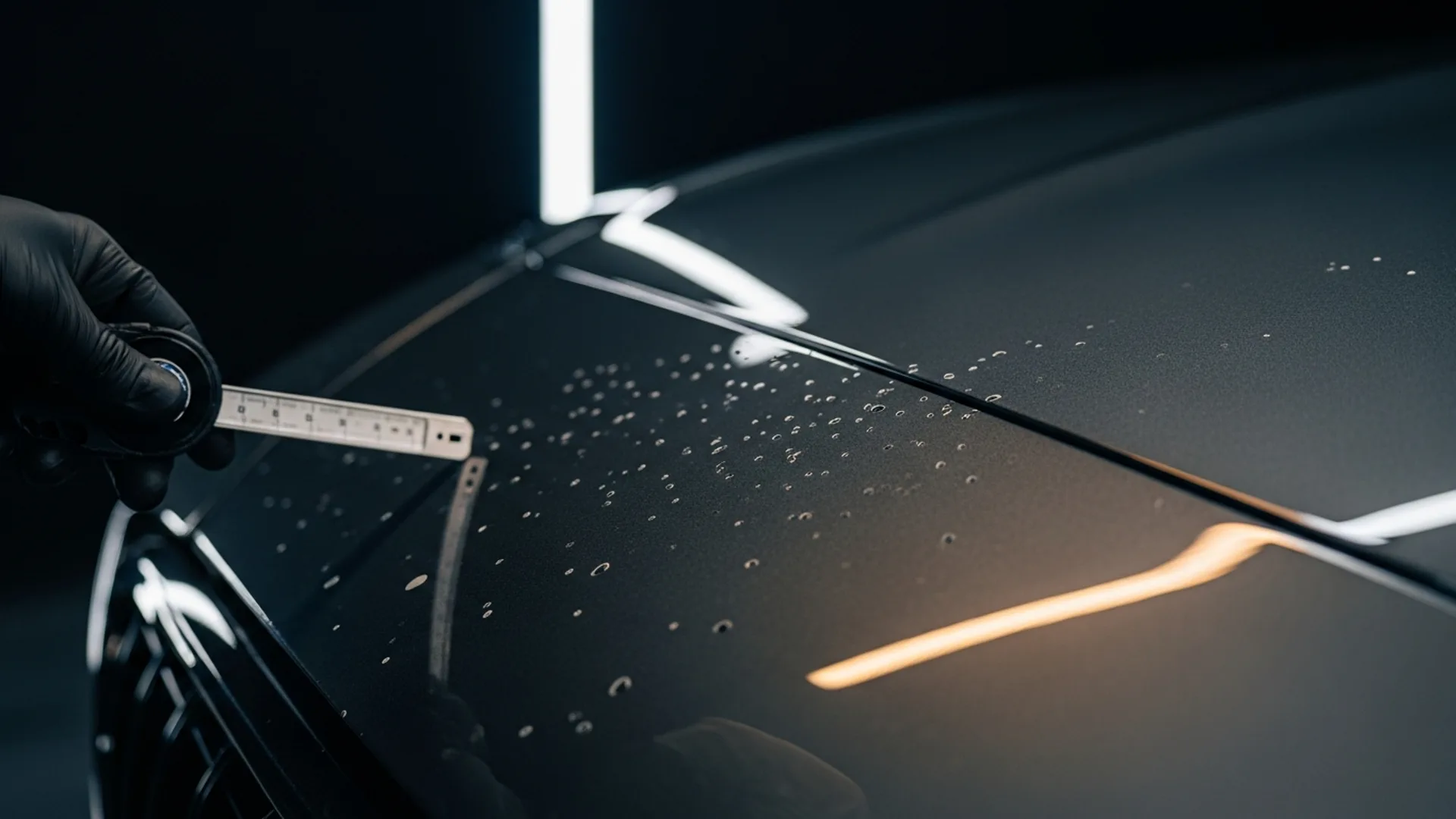
Can You Put PPF Over Existing Rock Chips? A Calgary Guide
Every PPF guide assumes a car that came off the truck last week. Most Calgary film work goes on a three-year-old car with a chipped nose. The depth rule that decides whether a chip gets filmed or filled, why no manufacturer publishes the touch-up cure time everyone quotes, the 8 microns of clear coat that limit what correction is even possible, and why film can make a chip look worse.
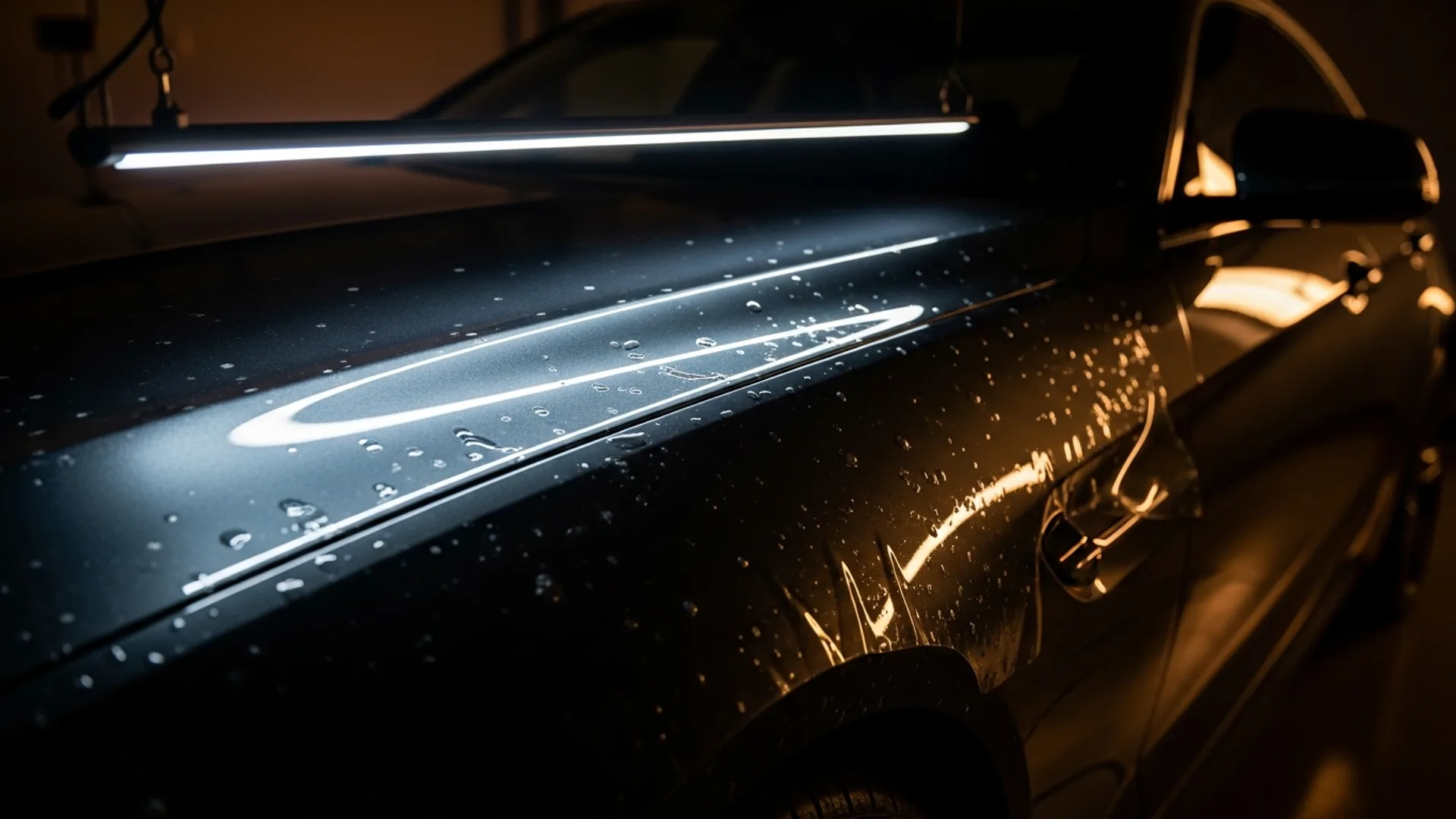
Hail Dents Under PPF: Does the Film Come Off for PDR?
The question no page answers properly: on a wrapped car, does the film have to come off before the dents get pushed out? It depends on the PDR method, not the film — rod work from behind leaves film untouched, while glue-pull tabs grip clear coat far more predictably than film. Plus why film can never be re-laid once removed, and the line item that should be its own line on the estimate.
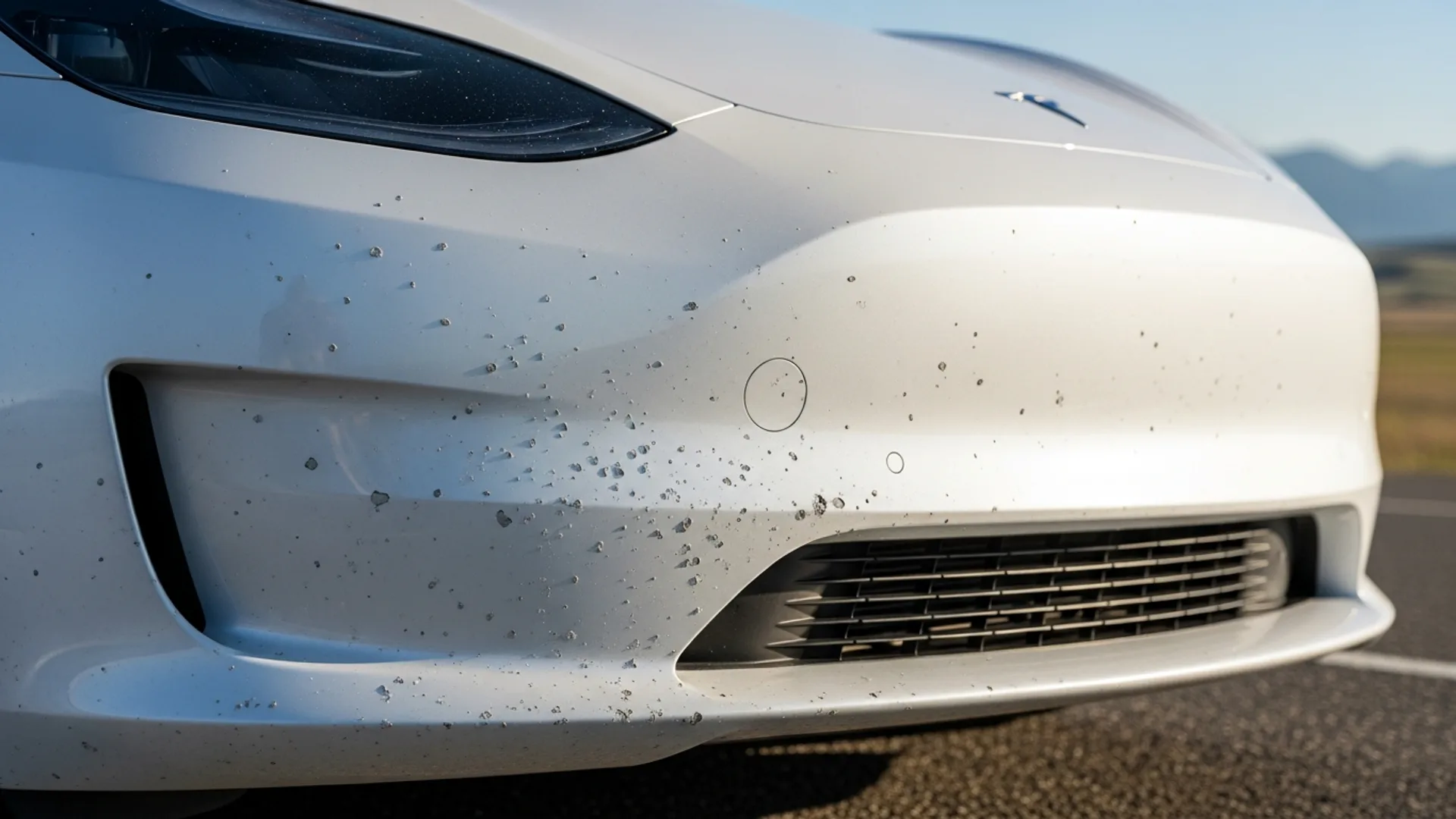
Why Tesla & EV Paint Chips So Easily in Calgary
New Teslas and EVs collect white rock chips within days of delivery — and it isn't bad luck. Their factory paint measures thinner and softer than German luxury marques, their flat front ends face highway gravel head-on, and Calgary's ring roads do the rest. The real paint-thickness numbers, why ceramic coating won't stop chips, and how PPF actually does.