
Window Tint
Matching Factory Privacy Glass in Alberta: What You Can Legally Do
Obsidian Auto Team, , updated , 6 Minute Read
Contents
Quick answer: Factory 'privacy glass' is tinted glass, not film: the colour is in the glass, it gives visual privacy, but it rejects far less heat than a good aftermarket film. In Alberta you can't legally add film to the front side windows to match dark rear glass: tinting material isn't allowed on the windshield or the windows beside the driver without…
Key Takeaways
- Factory 'privacy glass' is tinted glass, not film: the colour is in the glass, it gives visual privacy, but it rejects far less heat than a good aftermarket film.
- In Alberta you can't legally add film to the front side windows to match dark rear glass: tinting material isn't allowed on the windshield or the windows beside the driver without a Government of Alberta exemption permit.
- Even with an exemption permit, the front-side film must be clear UV film with a combined visible light transmittance of 50% or more, so it can't be used to match privacy glass.
- What you can do is upgrade the rear glass: a light ceramic film over factory privacy glass adds real heat rejection, and on cars without privacy glass the rear side windows and rear window can be tinted.
Reviewed 25 September 2026 against alberta.ca
Short answer: in Alberta you can't legally match clear front windows to dark factory privacy glass with film. The Government of Alberta says tinting material "is not allowed to be attached to the windshield and the windows to the left and right of the driver unless you get an exemption" (alberta.ca). What you can do legally is make the rear glass work harder, which is where most of the heat and privacy benefit of window tint is anyway.
Correction
An earlier version of this article recommended adding 50% film to the front side windows and described it as legal in Alberta. It isn't. Front-side film needs a Government of Alberta exemption permit for an approved medical condition, and even then only clear UV film of 50% or more combined VLT is allowed.
Factory Privacy Glass: What It Actually Is
Factory privacy glass looks like window tint but the darkness is in the glass itself, not a film on the surface:
| Property | Factory privacy glass | Aftermarket film |
|---|---|---|
| How it is made | Colour built into the glass | Film applied to the glass surface |
| Heat rejection | Limited | Good to excellent (ceramic best) |
| Can be removed? | No, part of the glass | Yes |
| Can be upgraded? | Yes, with film over it | Yes, by replacing the film |
Factory privacy glass varies by make and model; a meter reading of your own glass is the only reliable number.
What You Can Do Legally
- Upgrade the rear glass for heat. A light ceramic film over factory privacy glass adds the infrared rejection the glass lacks without making it much darker.
- No privacy glass? Tint the rear. On cars with clear glass all round, the rear side windows and rear window are outside Alberta's restriction and can take film for privacy and heat control.
- Leave the front side windows and windshield clear. Only a driver with an approved medical exemption permit may have film there, and only clear UV film of 50% or more combined VLT. See how the Alberta exemption works.
Film Over Privacy Glass: How the Numbers Stack
When you put film over factory privacy glass, the VLT values multiply rather than add:
Combined VLT = Factory glass VLT × Film VLT
| Factory glass VLT | + 70% film | + 50% film | + 35% film |
|---|---|---|---|
| 25% (medium privacy) | ~18% combined | ~13% combined | ~9% combined |
| 20% (dark privacy) | ~14% combined | ~10% combined | ~7% combined |
| 15% (very dark privacy) | ~11% combined | ~8% combined | ~5% combined |
Example: 25% factory glass with 50% ceramic film is about 12.5% combined, dark, with the ceramic layer doing the heat rejection.
For the full rule, see our Alberta window tint law guide, and for rear-glass film options, our window tinting prices.
Cooler Cabin, Less Glare, Real UV Protection
Join 696+ Calgary drivers who trust Obsidian Auto for window tinting
- Free Consultation
- Same-Day Response
Serving Calgary and surrounding areas • Drop-off at our SE Calgary studio
Frequently Asked Questions
Sources
External references used in this guide
Written by
Obsidian Auto Team
PPF, Ceramic Coating & Window Tint Installers
- Consumer Choice Award winner 2022–2025
- We install 3M, STEK, SunTek, GSWF paint protection film
- Computer-cut patterns, wrapped edges, no blades on paint
- 4.9-star average across 696+ Google reviews
- 10,000+ Calgary vehicles since 2020
- Calgary studio serving Airdrie, Cochrane, Okotoks & Chestermere
A crew of full-time installers and detailers in southeast Calgary, working on Calgary cars since 2020. Our guides are researched and drafted with AI assistance, then checked against our own prices and policies before publishing.
Meet the team
Ready to Protect Your Vehicle?
Get a quote from Calgary's most trusted detailing studio. We use only the best materials and back our work with industry-leading warranties.
Get A Quote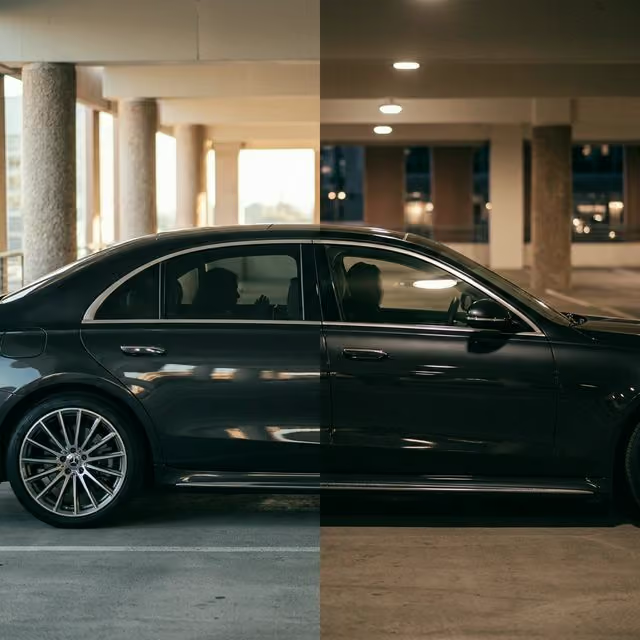
Window Tint
Can You See Inside a Car with 35% Tint? Visibility Guide with Photos
21st of April 2026
Daytime: silhouettes visible. Nighttime: impossible to see inside. Complete 35% VLT visibility guide covering every lighting condition and comparison to 20%.
Window Tint
Window Tint Heat Rejection Explained: How Much Cooler Does Tint Actually Make Your Car?
21st of April 2026
Calgary summers are intense. Can a thin layer of plastic really make a difference? Yes, but only if it's the right plastic.
Window Tint
9 Window Tint Myths Debunked: What Calgary Drivers Get Wrong About Tinting
21st of April 2026
Window tint technology has changed drastically in the last 10 years. We bust the biggest myths about GPS signal, night visibility, and fading.