
How PPF Protects Against Calgary's Road Salt and Calcium Chloride
Quick answer: Calgary uses over 100,000 tonnes of road salt and calcium chloride annually — a corrosive cocktail that attacks unprotected paint at the molecular level. Salt does not directly corrode paint but creates an electrolyte solution that accelerates oxidation wherever clear coat is compromised (chips, scratches, edges).
Key Takeaways
- Calgary uses over 100,000 tonnes of road salt and calcium chloride annually — a corrosive cocktail that attacks unprotected paint at the molecular level.
- Salt does not directly corrode paint but creates an electrolyte solution that accelerates oxidation wherever clear coat is compromised (chips, scratches, edges).
- PPF creates a continuous, sealed barrier that prevents salt and calcium from reaching paint, especially at vulnerable chip-prone zones.
- Unwrapped PPF edges are actually worse than no PPF — salt wicks underneath the film through capillary action, accelerating hidden corrosion.
Yes — properly installed paint protection film (PPF) is the single most effective defence against Calgary's road salt and calcium chloride, because it seals your paint behind a continuous barrier that salt water and de-icer cannot reach. Between November and April, Calgary's roads become a chemical battlefield: the City of Calgary and Alberta Transportation spread a mixture of sodium chloride (road salt) and calcium chloride (liquid de-icer) across every major route, creating a corrosive environment that no automotive paint system was designed to withstand long-term.
This is not theoretical damage. Every spring, detailing shops across Calgary are flooded with vehicles showing new rock chips filled with rust, white calcium staining on lower panels, and clear coat etching around unprotected edges. Paint protection film is the only product that creates a genuine barrier between your paint and Calgary's winter chemical assault.
The Chemistry: How Salt Destroys Automotive Paint
Understanding the mechanism helps explain why PPF is so effective. Road salt (NaCl) does not directly corrode automotive paint — but it creates the conditions for accelerated oxidation through a process called electrolytic corrosion:
- Rock chips expose bare metal — Calgary's gravel-laden highways create fresh chips daily during winter driving.
- Salt dissolves in road spray water — Creating an electrolyte solution that penetrates every chip and scratch.
- Electrolyte accelerates oxidation — The salt water acts as an efficient conductor for electrochemical corrosion, rusting exposed metal up to 5x faster than plain water.
- Freeze-thaw cycling worsens damage — Water trapped in chips expands when it freezes, widening the damage area and exposing more metal.
The result: a compounding cycle where rock chips create entry points, salt accelerates corrosion at those entry points, and freeze-thaw widens the damage. Every winter without PPF adds another layer to this cycle.
Calcium Chloride: The Hidden Threat
While most Calgary drivers worry about road salt, calcium chloride (CaCl₂) — the liquid de-icer sprayed on roads before storms — is arguably more damaging to automotive finishes:
Calcium Chloride Is Hygroscopic
Unlike salt that dries out, calcium chloride absorbs moisture from the air. It stays wet and active on your vehicle's surface even when the roads are dry — continuing to corrode long after the storm has passed.
It Leaves White Deposits
Dried calcium creates white powdery residue that bonds to clear coat. On dark paint, this creates a hazy, dull appearance that regular washing may not fully remove — requiring clay bar treatment or machine polishing.
It Attacks From Below
Calcium chloride solution is sprayed before storms and mixes with road spray. It coats undercarriages, wheel wells, and rocker panels — areas many drivers overlook during washing. This hidden coating continues corroding for days.
How PPF Blocks the Corrosion Cycle
Paint protection film interrupts the salt-corrosion cycle at its most critical point: it prevents rock chips from ever reaching the paint.
The film absorbs gravel impacts that would otherwise chip through your clear coat and expose bare metal. Without exposed metal, there is no entry point for salt water. Without salt water reaching metal, there is no electrochemical corrosion. The cycle never starts.
Even when impacts are severe enough to dent the film (but not penetrate it), the continuous sealed barrier prevents any moisture or chemical penetration. The film takes the damage so your paint does not.
New Rock Chips Per Winter Season (Average Calgary Highway Commuter)
Why Edge Quality Matters Even More in Winter
This is where many budget PPF installations fail catastrophically in Calgary winters. If your film has trimmed (non-wrapped) edges, water carrying dissolved salt and calcium can wick underneath the film through capillary action — the same force that makes water climb up a narrow tube.
Once salt water is underneath the film, it is trapped in a warm, dark, moist environment — the perfect conditions for corrosion. Worse, the film prevents you from seeing the damage happening underneath. By the time you notice (usually when the film begins bubbling or lifting), the paint underneath may already have significant oxidation.
In our Calgary studio, the worst cases we see every spring are not bare paint — they are budget wraps with trimmed edges that let brine creep under the film all winter. On the cars we re-wrap each March, the staining and dull oxidation almost always trace back to those unsealed edges and the hood-leading-edge gaps where road spray hits hardest. It is the single most common reason owners come to us to redo someone else's work.
This is why we insist on wrapped edges on every panel. When the film is folded around the panel edge, there is no gap for water to enter. The seal is continuous. Salt spray hits the film surface, rolls off, and never reaches the paint. For more on what separates quality installation from budget work, read our installer evaluation guide.
Winter Maintenance for PPF-Protected Vehicles
PPF dramatically reduces the damage from Calgary winters, but it still needs proper seasonal care to perform at its best:
- Rinse every 7–10 days — Salt and calcium buildup is cosmetic on PPF (not structural) but should be rinsed regularly. A touchless car wash or garden hose is sufficient.
- Avoid ice scrapers on filmed panels — PPF's self-healing handles minor scratches, but metal ice scrapers can gouge the film. Use a soft foam brush or let the defrost handle PPF-covered areas.
- Do not use hot water on frozen film — Thermal shock from pouring boiling water on frozen PPF can stress the adhesive. Use lukewarm water or let the car warm naturally.
- Focus on lower panels — Road spray concentrates on rocker panels, lower doors, and rear quarter panels. If these areas are PPF-covered, pay extra attention during winter washes.
- Apply sealant before winter — A PPF-safe spray sealant applied in October or November provides an additional hydrophobic layer that helps salt and calcium slide off during winter months. More maintenance tips in our comprehensive PPF care guide.
The Cost of Doing Nothing
Let us quantify what one Calgary winter does to an unprotected vehicle:
Annual Winter Damage (No PPF)
- 10–20 new rock chips per season
- Touch-up paint: $200–$400
- Spring polish (salt/calcium removal): $150–$300
- Rust repair (if chips are unaddressed): $500–$2,000+
- 5-Year Winter Damage Cost: $1,750–$13,500
Winter With PPF (Full Front)
- 0 rock chips on protected panels
- Touch-up paint: $0
- Spring maintenance: $0 (normal washing)
- Rust repair needed: $0
- One-Time PPF Investment: full front from $1,499
Protect Your Vehicle Before This Winter
Every day of Calgary winter driving without PPF adds new chips that become new entry points for salt corrosion. The optimal time to install is fall, before the first snowfall, but our climate-controlled workspace allows quality installation year-round.
Get a quote today and stop paying for winter damage season after season. For pricing details, see our complete PPF cost guide. For undercarriage rust protection, pair PPF with our undercoating services for comprehensive winter defense.
Ready to Protect Your Vehicle from Rock Chips?
Join 705+ Calgary drivers who trust Obsidian Auto for PPF installation
Serving Calgary and surrounding areas • Free Uber shuttle with every service
| Feature | Unprotected Paint in Calgary Winter | PPF-Protected Paint in Calgary Winter |
|---|---|---|
| Rock Chip Vulnerability | Direct paint exposure | Film absorbs impact |
| Salt Corrosion Path | Enters every chip & scratch | Sealed barrier blocks entry |
| Calcium Chloride Staining | Etches clear coat directly | Film surface is resistant |
| Spring Paint Condition | New chips, oxidation, staining | Pristine — same as fall |
| Annual Touch-Up Cost | $200–$800 for chip repair | $0 |
| 5-Year Resale Impact | Paint degradation visible | Factory-fresh appearance |
Frequently Asked Questions

Ready to Protect Your Vehicle?
Get a quote from Calgary's most trusted detailing studio. We use only the best materials and back our work with industry-leading warranties.
Get A QuoteRelated Intelligence
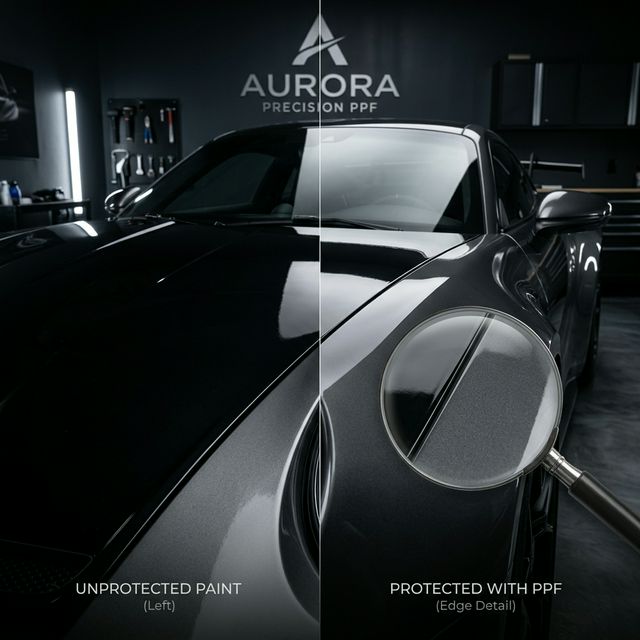
What Are the Drawbacks of Paint Protection Film? Honest Pros & Cons
Every drawback of PPF explained honestly: cost, texture change, limitations, maintenance restrictions, and removal—plus the counter-arguments that put each in perspective.

How Long Does PPF Last on a Car? Lifespan Guide for Calgary Drivers
Premium PPF lasts 7–10+ years, but Calgary's UV, salt, and temperature swings affect longevity. Brand tiers, maintenance tips, and when to replace.
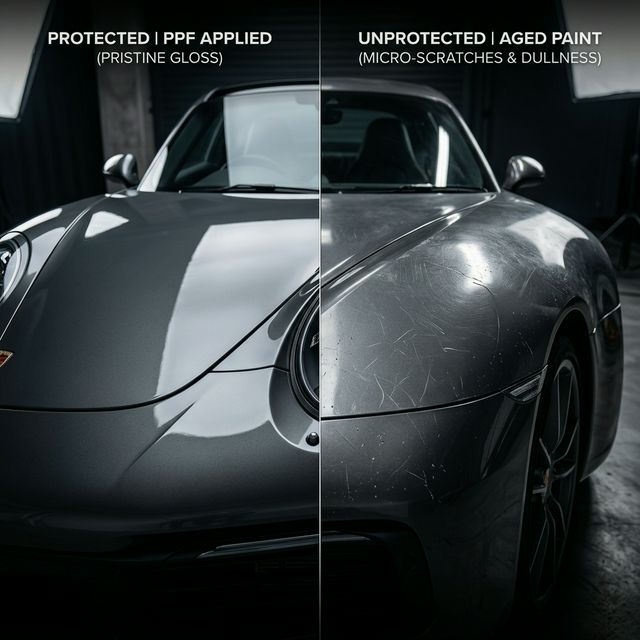
How Does PPF Look After 5 Years? Real-World Aging & What to Expect
After 5 years on Calgary roads, premium PPF still looks showroom-fresh. We document what 5-year-old film actually looks like, from self-healing to clarity.