
How to Clean and Maintain PPF in Calgary: The Definitive Care Guide
Quick answer: Touchless car washes are safe for PPF — automated brush washes are not. The brushes create micro-abrasions and can catch film edges. Use pH-neutral car wash soap only — avoid dish soap, degreasers, and any product containing petroleum distillates or abrasive compounds.
Key Takeaways
- Touchless car washes are safe for PPF — automated brush washes are not. The brushes create micro-abrasions and can catch film edges.
- Use pH-neutral car wash soap only — avoid dish soap, degreasers, and any product containing petroleum distillates or abrasive compounds.
- Calgary's road salt and calcium chloride should be rinsed off within 48 hours to prevent staining the film's top coat.
- Apply a PPF-specific sealant or spray wax every 3–4 months to maintain gloss, hydrophobic properties, and extend film lifespan. This guidance is written for gloss film: on satin and matte film the rule comes from your own film maker's care document, and the published instructions range from an outright ban on wax to a required six-month sealing interval.
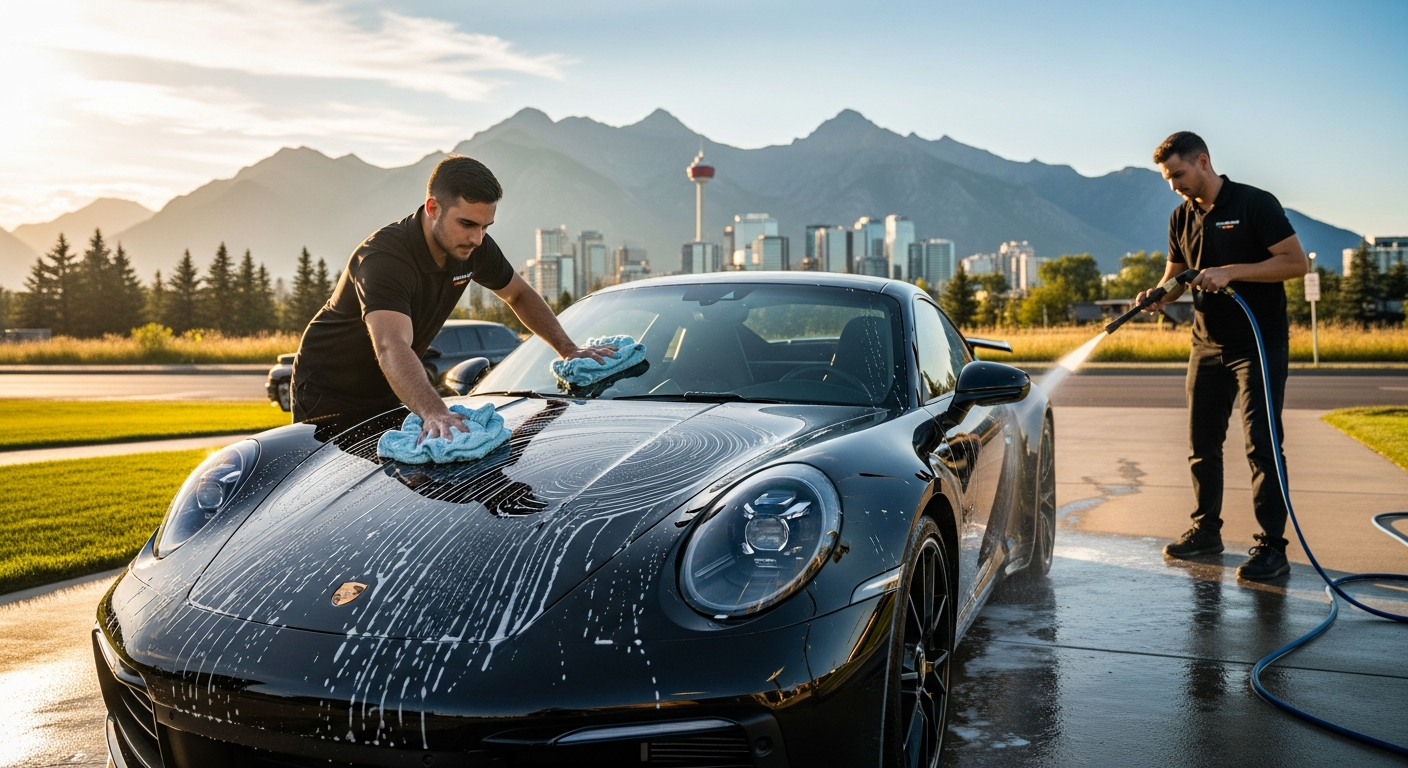
To clean and maintain PPF, hand wash with a pH-neutral car soap and the two-bucket method, rinse off Calgary road salt and calcium chloride within 48 hours, and reapply a PPF-safe sealant every 3–4 months — never touch it with brush car washes, dish soap, or abrasive compounds. Get those basics right and your film stays flawless for a decade. One scope note: the sealing advice on this page is written for gloss film, and satin or matte film follows its own maker's rules instead.
You invested in paint protection film — starting from $899 and climbing well into the thousands for full-vehicle coverage. Proper maintenance is what determines whether that film looks flawless for 10 years or degrades prematurely. The good news: caring for PPF is simple. The bad news: many Calgary drivers are unknowingly damaging their film with incorrect products and techniques.
This guide covers everything you need to know about washing, maintaining, and protecting your PPF in Calgary's harsh climate — from the right products to use, to the seasonal challenges unique to Alberta winters, to the maintenance schedule that maximizes your film's lifespan.
The Golden Rules of PPF Maintenance
Before getting into specific scenarios, here are the five rules that apply universally to PPF care. Follow these and your film will outlast its warranty:
Rule 1: pH-Neutral Soap Only
Use dedicated car wash soap with a pH between 6 and 8. Kitchen dish soap, degreasers, and all-purpose cleaners are too alkaline (pH 10–12) and will strip the film's protective top coat over time, accelerating wear and reducing self-healing capability.
Rule 2: No Abrasive Contact
Never use automated brush car washes, scouring pads, magic erasers, or stiff-bristle brushes on PPF. The film's self-healing top coat is designed to repair light scratches from normal driving — not repeated aggressive abrasion from improper cleaning tools.
Rule 3: Rinse Salt Within 48 Hours
Calgary's winter road treatment — a mix of salt and calcium chloride — is safe on PPF in the short term. But extended exposure (weeks without rinsing) allows calcium deposits to bond to the film surface, creating white haze that requires professional correction. Rinse after major salt exposure.
Rule 4: Seal Every 3–4 Months
A PPF-safe spray sealant or ceramic-infused spray wax applied quarterly maintains hydrophobic water beading, UV protection, and gloss depth. Think of it like moisturizer for your film — it replenishes the protective surface layer that daily driving gradually wears down. On a satin or matte finish this quarterly habit does not transfer automatically, and it is worth reading why quarterly sealing is not a universal rule on satin film before you apply anything.
Rule 5: Address Contaminants Quickly
Bird droppings, tree sap, and insect residue are acidic and will etch the film surface if left for more than 24–48 hours. PPF is more resistant to etching than bare paint, but it is not immune. Quick removal with warm water and a soft cloth prevents permanent marks.
How to Hand Wash Your PPF Vehicle
Hand washing is the safest method for PPF-wrapped vehicles. Here is the proper technique:
- Pre-rinse thoroughly — Start with a pressure washer or garden hose to remove loose dirt and grit. Never scrub a dry, dirty surface — the particles act like sandpaper.
- Two-bucket method — Fill one bucket with soapy water (pH-neutral car wash soap) and one with clean rinse water. Dip your wash mitt in the soapy bucket, wash one panel, rinse the mitt in the clean bucket, then repeat.
- Top-down washing — Start at the roof and work down. Lower panels carry the heaviest contamination (road salt, brake dust, gravel residue) and you want to wash these last to avoid dragging dirty water across cleaner surfaces.
- Use a plush microfiber mitt — Lambswool or high-quality microfiber mitts are the safest contact tools for PPF. Avoid sponges, which can trap grit and create scratches.
- Dry with a microfiber towel or air blower — Pat dry with a clean, plush drying towel. Never drag a damp towel across the surface. Alternatively, use a filtered air blower to sheet water off — especially effective if your PPF has ceramic coating on top.
Car Wash Types: What is Safe and What is Not
| Wash Type | Safe for PPF? | Notes |
|---|---|---|
| Hand Wash (Two-Bucket) | Yes | Safest method — recommended for all PPF vehicles |
| Touchless Automatic | Yes | Safe — no physical contact with film surface |
| Rinseless Wash | Yes | Safe if using proper rinseless product and plush mitt |
| Foam Cannon Pre-Wash | Yes | Excellent for loosening heavy winter contamination |
| Soft-Touch Automatic | ⚠️ CAUTION | Cloth curtains can catch film edges — avoid if possible |
| Brush Automatic | No | Hard brushes scratch film surface and pull edges |
| Self-Serve Pressure Wash | Yes | Safe at the standoff your film brand publishes — 12 to 36 inches — and never aimed at an edge |
Calgary Winter Maintenance Schedule
Winter is the hardest season on PPF in Calgary. Road salt, calcium chloride, gravel, and temperature extremes all stress the film. Here is the seasonal maintenance schedule we recommend:
Winter (Nov – Mar)
- Wash every 7–10 days (remove salt/calcium)
- Focus on lower panels and wheel wells
- Apply sealant at start of season (November)
- Avoid ice scrapers on PPF-covered areas
- Use warm (not hot) water on frozen film
Spring / Summer (Apr – Oct)
- Wash every 2–3 weeks
- Remove bug splatter within 24 hours
- Apply sealant in April and again in July
- Check for any lifted edges (spring thaw)
- Self-healing is most active in summer sun
In our Calgary studio, the maintenance mistake we see most after a hard winter is edge-lift from pressure washing. Drivers hold the wand a few inches off a wrapped bumper to blast away the grey salt film, and the concentrated stream works its way under a film edge until it peels. The second most common issue is chloride brine that's been left to bake on for weeks — Calgary puts down sodium chloride and calcium chloride, and once that white haze bonds to the top coat a normal wash won't touch it and we have to correct it by hand. The minimum standoff is set by your film's maker and the published figures range from 12 inches to 36, so work to the most conservative one unless you know which film you have. Keep the nozzle square to the panel rather than raked toward an edge, and rinse the brine off within a day or two, and you'll avoid both. Before planning that rinse, check the Stage 1–4 outdoor water restrictions that can put a home wash off-limits, because two of the four stages prohibit it outright.
Products to Use (and Products to Avoid)
PPF-Safe Products ✅
- pH-neutral car wash soap (Chemical Guys, Meguiar's Gold Class)
- PPF-specific spray sealant (Gyeon Preserve)
- Isopropyl alcohol (IPA) for spot cleaning (50% dilution)
- Microfiber towels (300+ GSM, edgeless preferred)
- Foam cannon for pre-wash
Products to Avoid ❌
- Dish soap (strips protective coating)
- Cutting compounds and rubbing compound
- Acetone, paint thinner, nail polish remover
- WD-40 or petroleum-based products
- Magic erasers or abrasive sponges
Maximizing Self-Healing Performance
Light scratches and swirl marks on your PPF will self-heal with warmth, though no film maker publishes a temperature the film itself has to reach. The only baseline any of them states is room temperature, and two suggest pouring warm water at about 120°F over the mark to speed it along — 120°F is the temperature of the water you pour, not of the film. In Calgary's summer, direct sunlight is usually enough on its own. In winter, you can help it by:
- Pouring warm (not boiling) water over the scratched area
- Using a heat gun on low setting from 12+ inches away
- Parking in a heated garage for several hours
The self-healing function works on surface-level scratches only — deep gouges that penetrate the full 8-mil film thickness will not heal. However, these deep impacts would have damaged your bare paint anyway. The film takes the hit so your clear coat does not.
When to Schedule Professional Maintenance
For most PPF owners, an annual professional inspection and detail is sufficient. During this visit, a technician will:
- Inspect all film edges for lifting or contamination ingress — including whether rust-proofing oil actually creeps in under a film edge
- Remove any deep staining that home washing cannot address
- Apply professional-grade sealant for 6–12 months of hydrophobic protection
- Assess whether any panels need replacement due to impact damage
Ready to keep your PPF performing at its best? Schedule a maintenance detail with our team. For questions about pairing PPF with ceramic coating for easier maintenance, read our PPF vs ceramic coating guide.
Ready to Protect Your Vehicle from Rock Chips?
Join 705+ Calgary drivers who trust Obsidian Auto for PPF installation
Serving Calgary and surrounding areas • Free Uber shuttle with every service
Frequently Asked Questions

Ready to Protect Your Vehicle?
Get a quote from Calgary's most trusted detailing studio. We use only the best materials and back our work with industry-leading warranties.
Get A QuoteRelated Intelligence
Can You Go Through a Carwash with PPF Film? The Complete Answer
Touchless car washes are safe. Brush washes are not. Complete PPF car wash guide covering wash types, winter tips, products to avoid, and maintenance advice.
Can I Wash My Car After PPF? Post-Installation Care Timeline
Wait 48 hours, then gentle hand wash only for 7 days. Complete post-PPF washing timeline with winter cure adjustments and bubble guidance.
Ceramic Coating Maintenance in Calgary (2026 Guide)
How to maintain a ceramic coating in Calgary: the pH-neutral wash routine, booster schedule, annual decon, and the mistakes that quietly kill your coating.