Guides
Is Undercoating Worth It in Calgary? A Data-Driven Answer
Obsidian Auto Team, , updated , 12 Minute Read
Contents
Quick answer: Calgary uses over 150,000 tonnes of road salt and sand annually — creating one of the most corrosive driving environments in Canada. The average unprotected vehicle in Calgary develops visible frame rust within 5–7 years — compared to 12–15 years in milder climates.
Key Takeaways
- Calgary uses over 150,000 tonnes of road salt and sand annually — creating one of the most corrosive driving environments in Canada.
- The average unprotected vehicle in Calgary develops visible frame rust within 5–7 years — compared to 12–15 years in milder climates.
- Professional oil-based undercoating costs $250–$450 per year — versus $2,000–$15,000+ for rust-related structural repairs.
- Undercoating provides the highest protection-to-cost ratio of any vehicle preservation service available in Calgary.
Yes — in Calgary, undercoating is worth it. Spending roughly $250–$450 a year prevents $2,000–$15,000+ in rust repairs, making it the single highest-ROI vehicle preservation investment you can make in this city. Below is the data behind that answer — Calgary's salt load, real repair costs, and the 10-year ROI math.
Calgary's Corrosion Problem by the Numbers
Calgary has one of the most corrosive driving environments in Canada. Here is why:
- 150,000+ tonnes of road salt and sand spread annually by the City of Calgary
- Calcium chloride used extensively — more corrosive than traditional sodium chloride and stays active at lower temperatures
- 120+ freeze-thaw cycles per year during transitional seasons — each cycle pushes salt-laden moisture deeper into crevices
- 6–7 month salt season (October through April) — your vehicle is exposed for more than half the year
- -40°C to +35°C temperature range — thermal cycling accelerates metal fatigue and coating degradation
The classic frame-rust case is a truck or SUV that has commuted Deerfoot and Stoney Trail through four to six salt and calcium chloride seasons without ever being treated. By the time the rocker panels are bubbling, the real damage is already hidden inside the frame rails, which is why treatment works best when it starts before the first salt season and is kept up every year.
Vehicle Corrosion Timeline — Calgary vs. Mild Climate
What Rust Actually Costs
When people say "it's just rust," they underestimate the financial impact. Here are real repair costs from Calgary body shops:
| Rust Damage | Repair Cost | Time Off Road |
|---|---|---|
| Wheel well surface rust | $300–$600 per side | 1–2 days |
| Rocker panel rust-through | $800–$1,500 per side | 3–5 days |
| Frame rail section replacement | $2,000–$5,000 | 1–2 weeks |
| Subframe corrosion repair | $3,000–$8,000 | 2–3 weeks |
| Brake/fuel line replacement (corroded) | $800–$2,000 | 1–3 days |
| Failed safety inspection (frame rust) | Vehicle condemned — total loss | Permanent |
The final row is the worst-case scenario, and it happens to Calgary vehicles regularly. When frame rust reaches a critical threshold, the vehicle fails safety inspection and cannot be re-registered. Your $25,000–$60,000 vehicle becomes scrap metal overnight — regardless of how the engine, transmission, and interior look. Buying a used vehicle that already has some surface rust on the frame? It is not automatically too late — see whether undercoating a used, already-rusty car is still worth it for how to tell the difference between stabilizable surface rust and structural damage that undercoating cannot fix.
The ROI Calculation
Let us compare the cost of undercoating versus the cost of not undercoating over a 10-year vehicle ownership:
With Annual Undercoating
- • 10 applications × $350 average = $3,500 total
- • Expected rust repairs: $0–$500
- • Resale value preservation: +$2,000–$4,000
- • Net cost: ~$3,500
- • Net benefit: $2,000–$4,000 (resale)
Without Undercoating
- • Undercoating cost: $0
- • Expected rust repairs: $2,000–$8,000+
- • Resale value loss: -$3,000–$6,000
- • Risk of total loss (failed inspection): Present
- • Net cost: $5,000–$14,000+
Annual undercoating pays for itself 2–4x over a 10-year ownership period — purely from avoided repairs and preserved resale value. This does not account for the safety risk of structural corrosion, which is invaluable.
Where Rust Actually Starts (And Why DIY Misses It)
The most destructive rust does not start on visible surfaces. It starts in hidden areas that DIY spray products cannot reach:
- Internal frame rail cavities — hollow box-section rails that trap road spray
- Spot weld joints — where two metal panels are welded together with microscopic gaps that wick moisture
- Door bottom sills — enclosed channels that collect drain water mixed with salt
- Suspension mounting points — stressed metal joints where corrosion weakens structural integrity
- Brake and fuel line routing — steel lines running along the frame, exposed to direct salt spray
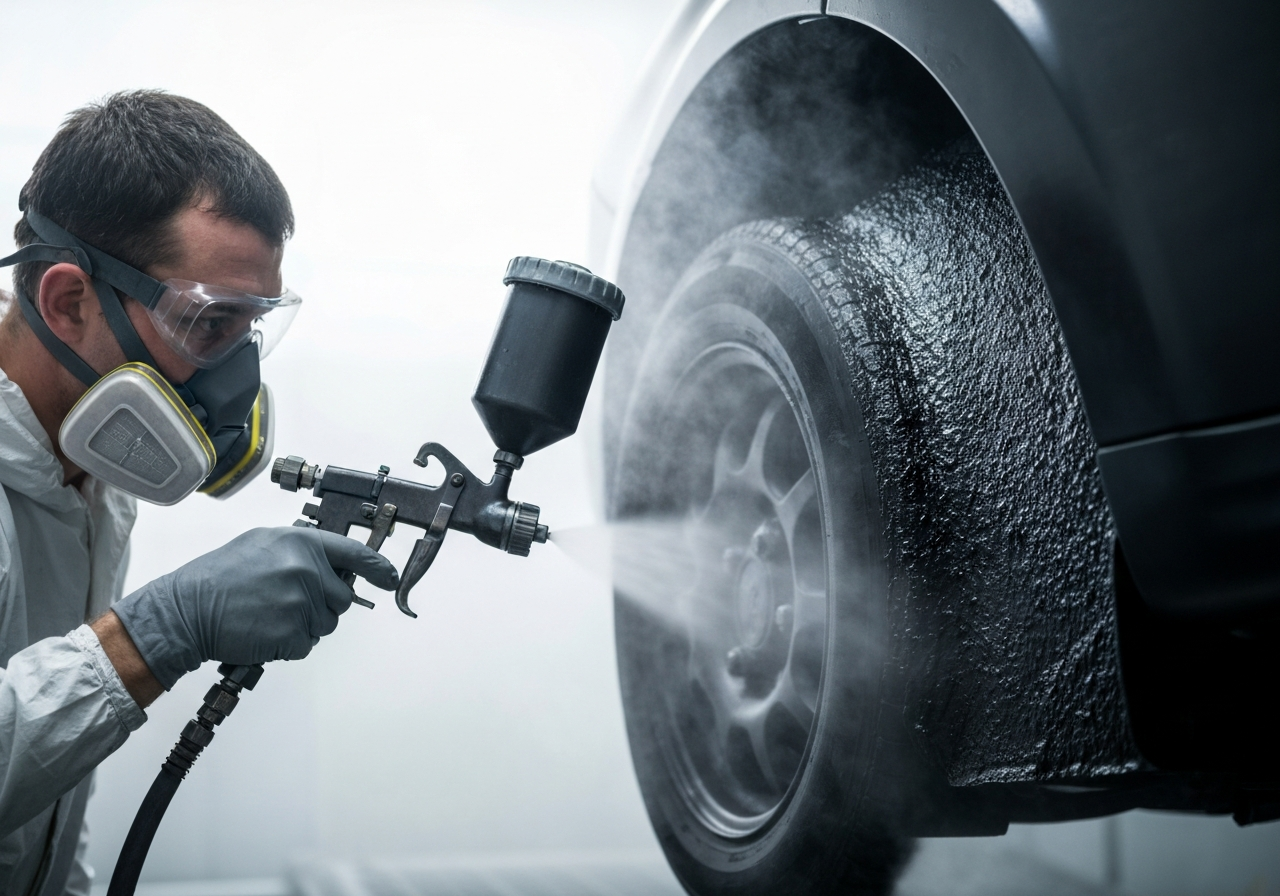
Professional application uses heated oil sprayed at high pressure through specialized nozzles inserted into factory access ports, drain holes, and custom-drilled access points. This reaches every internal cavity and creates a continuous barrier that self-heals against abrasion.
Undercoating or PPF First on a Tight Budget?
They protect different parts of the car, so this is a question of order rather than either-or. PPF protects the painted panels at the front from chips; undercoating protects the frame, wheel wells, seams and lines underneath from salt corrosion. There is no overlap, and both can be booked together.
- New vehicle (first couple of years): PPF first. The factory corrosion protection is still fresh, while the paint is at its best and gets chipped from the first highway drive.
- Three years or older: undercoating first. Factory protection wears on the exposed underbody, and structural rust is a safety and repair problem, not a cosmetic one.
- Selling within a few years vs keeping for the long haul: paint condition shows up at resale; a sound underbody decides whether a car is worth keeping at all.
When to Book: Late Summer and Early Fall
Oil-based undercoating goes on best when the underbody is warm and dry. Warm product flows further into seams and spot welds, and a dry underbody means no water is trapped under the coating; ice or slush packed into crevices in winter has to be dried out first, or the coating sits on top of the moisture instead of the metal. Booking between July and September also gets the coating on before the first salt of the season, and ahead of the October rush when many shops book weeks out.
The Verdict: Is Undercoating Worth It in Calgary?
In Calgary, professional oil-based undercoating is not optional — it is essential preventive maintenance, similar to oil changes and brake inspections. The math is clear, the science is clear, and the consequences of neglect are severe.
Get Your Free Quote for undercoating at Obsidian Auto. For a comparison of dealer vs. specialist undercoating, explore our guides.
Protect Your Vehicle from Rust & Corrosion
Join 696+ Calgary drivers who trust Obsidian Auto for undercoating
- Free Consultation
- Same-Day Response
Serving Calgary and surrounding areas • Drop-off at our SE Calgary studio
Frequently Asked Questions
Sources
External references used in this guide
Written by
Obsidian Auto Team
PPF, Ceramic Coating & Window Tint Installers
- Consumer Choice Award winner 2022–2025
- We install 3M, STEK, SunTek, GSWF paint protection film
- Computer-cut patterns, wrapped edges, no blades on paint
- 4.9-star average across 696+ Google reviews
- 10,000+ Calgary vehicles since 2020
- Calgary studio serving Airdrie, Cochrane, Okotoks & Chestermere
A crew of full-time installers and detailers in southeast Calgary, working on Calgary cars since 2020. Our guides are researched and drafted with AI assistance, then checked against our own prices and policies before publishing.
Meet the team
Ready for a finish that stays clean?
Ceramic coating packages rated for one, four or eight years, applied in a dust-controlled bay.
Get my free quote
Guides
PPF Calgary: Is It Worth the Investment in 2026?
21st of April 2026
A deep dive into the financial math of rock chip repairs in Calgary vs. the cost of PPF. Understand the true ROI of protecting your paint.

Guides
How to Choose Between Full Front and Full Body PPF in Calgary
21st of April 2026
Analyzing Calgary driving habits (Deerfoot vs downtown) to help users select the right package. Which coverage gives you the best protection for your budget?

Guides
PPF in Calgary Winters: Does It Crack, Peel, or Yellow?
21st of April 2026
Seasonal authority content explaining how premium PPF reacts to -40°C, salt, and calcium chloride on Calgary roads.