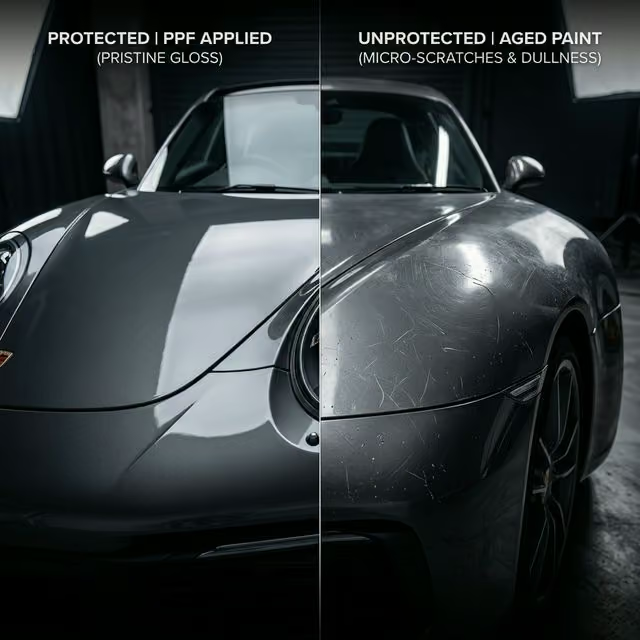
How Does PPF Look After 5 Years? Real-World Aging & What to Expect
Quick answer: After 5 years, premium PPF (3M, STEK, SunTek) still looks virtually identical to day one—no yellowing, no peeling, full self-healing capability intact. Budget films tell a completely different story: yellowing, bubbling, edge lifting, and loss of clarity are common by year 3–4.
Key Takeaways
- After 5 years, premium PPF (3M, STEK, SunTek) still looks virtually identical to day one—no yellowing, no peeling, full self-healing capability intact.
- Budget films tell a completely different story: yellowing, bubbling, edge lifting, and loss of clarity are common by year 3–4.
- The biggest visual change after 5 years is the dramatic contrast between protected and unprotected panels—PPF panels look years newer.
- Self-healing capability remains fully functional at the 5-year mark on premium films—scratches still vanish with heat exposure.
- Proper maintenance (regular washing, ceramic coating, avoiding harsh chemicals) is what separates 'still looks new' from 'starting to degrade' at 5 years.
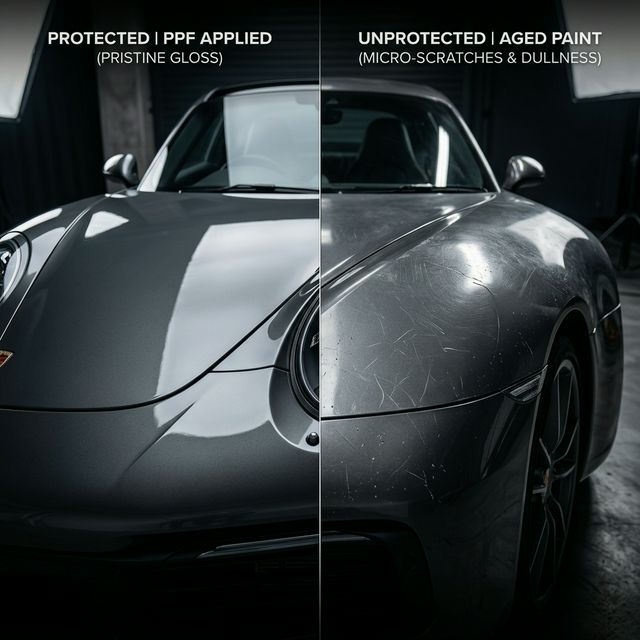
Here's the short answer: quality PPF that's been properly maintained looks virtually identical to the day it was installed after 5 years—clear, glossy, and non-yellowing, with self-healing still fully active. Modern TPU films simply don't yellow the way the old myths suggest. Budget film is a different story. Five years is a meaningful checkpoint for any vehicle protection investment—five Calgary winters, five gravel seasons, thousands of kilometres of highway—and we've documented hundreds of 5-year-old installations at Obsidian Auto to show you exactly what to expect.
Premium PPF at 5 Years: Still Showroom-Fresh
When we inspect premium PPF installations (3M Scotchgard Pro, STEK DYNOshield, SunTek Ultra) at the 5-year mark, here's what we consistently find:
What We See at 5 Years (Premium)
- ✅ Crystal-clear film with no yellowing
- ✅ Self-healing still active—scratches vanish
- ✅ Edges firmly adhered to all panels
- ✅ Hydrophobic properties working (with coating)
- ✅ No bubbling, peeling, or cracking
- ✅ Protected paint looks factory-new underneath
What We See at 5 Years (Budget)
- ❌ Noticeable yellowing across all panels
- ❌ Self-healing has stopped working entirely
- ❌ Multiple edges lifting and catching debris
- ❌ Surface appears hazy and dull
- ❌ Bubbling and cracking on bumper areas
- ❌ Film needs complete removal and replacement
The Most Striking Observation
The most dramatic visual at 5 years isn't the film itself—it's the contrast between protected and unprotected panels. When a vehicle has full front PPF, the hood and bumper look years newer than the doors and rear panels. The protected panels have zero chips, zero swirls, and vibrant colour. The unprotected panels show the natural aging of 5 Calgary winters: faded colour, accumulated micro-scratches, and rock chip dots along the lower edges.
In our Calgary studio, the 5-year-old installs we re-inspect almost always disprove the yellowing myth before we say a word—a customer books in bracing for a discoloured hood, and under our shop lights the premium film is still water-clear. What we do find, and correct, tends to be mechanical rather than optical: a lower front bumper wrap that's taken five seasons of gravel and shows faint stone-strike stippling that fully heals under a heat gun, or an occasional edge along a tight body line that's started to lift where a pressure washer got too close. We'll warm the film and run a scratch test right in front of the owner—drag a fingernail across the top coat, hold heat to it, and watch it flow back smooth in seconds—because seeing self-healing still work at year five is what convinces people the film has years of life left. The paint underneath, on every premium install we've ever unwrapped here, comes off looking factory-fresh.
The 5-Year Self-Healing Test
One of the most common questions about aging PPF is whether self-healing still works after years of use. At 5 years on premium film, the answer is a definitive yes.
How Self-Healing Works at Year 5
The self-healing top coat on premium PPF is an elastomeric polymer layer that "remembers" its smooth shape. When scratched lightly, the polymer chains are displaced but not broken. Heat energy (from sunlight, warm water, or heat gun) gives the chains enough energy to flow back to their original position, eliminating the scratch. How much heat is a question the film makers answer less precisely than you would expect — we compared what each one publishes.
Light Scratches
Still heal in 15-30 seconds in Calgary summer sun
Swirl Marks
Heal with warm water pour even in winter
Car Wash Marring
Gone within hours of sun exposure
Real-World Damage Absorbed by Year 5
When we examine 5-year-old PPF installations closely, we can see evidence of every impact the film has absorbed—impacts that would have been permanent damage on bare paint:
Rock Chip Absorption
A typical Calgary highway commuter will see 50–75 rock impacts over 5 years on the front end. On bare paint, each creates a permanent chip costing $150–$400 to repair. On PPF, the film absorbs the impact—you might notice small marks in the film that self-heal with sunlight.
UV Protection
Calgary's 12,000+ hours of UV exposure over 5 years cause measurable paint fading on unprotected panels. PPF blocks UV, preserving the original paint colour. When film is removed, the colour difference between protected and unprotected areas is startling.
Chemical Exposure
Five winters of road salt, calcium chloride, bug impacts, bird droppings, and tree sap—all chemical exposures that etch and damage bare clear coat. PPF takes the hit instead, and the film surface can be cleaned without worrying about permanent paint etching.
5-Year Maintenance Checkpoint
At the 5-year mark, we recommend bringing your vehicle in for a detailed PPF inspection. Here's what we check and what we recommend:
Edge Adhesion Check
We inspect every edge for lifting. Any early lifting is repaired with heat re-tacking ($50–$100) before it spreads.
Clarity Assessment
Checking for any yellowing, hazing, or cloudiness. Premium film should show zero degradation at 5 years.
Self-Healing Test
We create a test scratch and apply heat to verify self-healing is still active.
Ceramic Coating Refresh
If ceramic coating was applied over PPF, a maintenance layer is applied to restore hydrophobic properties and UV blocking.
What Happens After Year 5?
If your PPF passes the 5-year checkpoint (which premium film always does), you're looking at another 3–5+ years of protection before replacement becomes necessary. The film continues to protect, self-heal, and maintain clarity. When that point does arrive, what removal costs and when it can risk your paint matters more than the calendar. Years 5 through 8 typically show:
- • Years 5–7: Continued excellent performance. No visible change from the 5-year state. Self-healing active. Full protection.
- • Years 7–8: Very subtle changes may begin. Slight reduction in self-healing speed. Slight loss of hydrophobic properties (refreshed with ceramic maintenance). Film still provides full rock chip protection.
- • Years 8–10: End-of-life indicators may appear: gradual edge lifting in high-stress areas, reduced self-healing, possible slight yellowing. Film still protects against impacts but cosmetic performance declines. Time to plan replacement.
Time for a PPF Check-Up?
If your PPF is approaching 5 years, schedule a free inspection to ensure it's performing at its best.
Related Resources
Ready to Protect Your Vehicle from Rock Chips?
Join 705+ Calgary drivers who trust Obsidian Auto for PPF installation
Serving Calgary and surrounding areas • Free Uber shuttle with every service
Pros
- Premium PPF at 5 years looks virtually identical to fresh installation—no visible aging.
- Self-healing continues working perfectly, keeping surface scratch-free without polishing.
- Protected panels are noticeably better than unprotected panels of the same age—clear evidence of value.
- No yellowing on premium TPU-based films even after 5 Calgary summers.
- Film has absorbed dozens of rock chips that would have destroyed bare paint.
- Paint underneath is factory-fresh—verified when panels are re-wrapped.
Cons
- Some edge wear possible on high-impact areas (front bumper lower edge).
- Hydrophobic properties may have diminished slightly without ceramic coating maintenance.
- May have accumulated minor contamination spots in hard-to-clean areas.
- Budget films by this point are typically in need of replacement.
- Film edges in body lines may have collected some wax or polish buildup.
- Very slight surface texture change may be more noticeable than at installation.
Frequently Asked Questions
Ready to Protect Your Vehicle?
Get a quote from Calgary's most trusted detailing studio. We use only the best materials and back our work with industry-leading warranties.
Get A QuoteRelated Intelligence
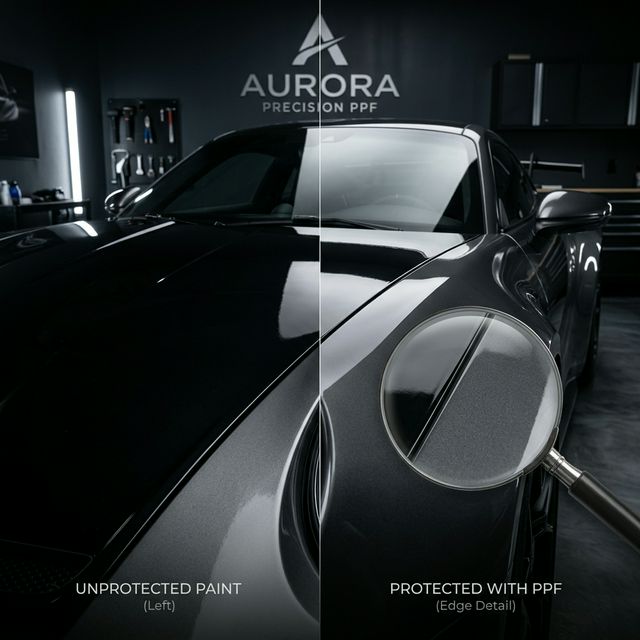
What Are the Drawbacks of Paint Protection Film? Honest Pros & Cons
Every drawback of PPF explained honestly: cost, texture change, limitations, maintenance restrictions, and removal—plus the counter-arguments that put each in perspective.

How Long Does PPF Last on a Car? Lifespan Guide for Calgary Drivers
Premium PPF lasts 7–10+ years, but Calgary's UV, salt, and temperature swings affect longevity. Brand tiers, maintenance tips, and when to replace.
Why Is PPF Not a Good Investment? Debunking the Top Criticisms
Honest analysis of every PPF criticism: too expensive, yellows, damages paint, just marketing. When PPF IS worth it vs when you should skip it.