Why Is PPF Not a Good Investment? Debunking the Top Criticisms
Quick answer: The #1 criticism — 'PPF is too expensive' — ignores cumulative costs of rock chip repairs, paint touch-ups, and diminished resale value without it. PPF isn't a good investment for every vehicle — budget cars under $15K, garage-kept vehicles, and short-term ownership may not see ROI.
Key Takeaways
- The #1 criticism — 'PPF is too expensive' — ignores cumulative costs of rock chip repairs, paint touch-ups, and diminished resale value without it.
- PPF isn't a good investment for every vehicle — budget cars under $15K, garage-kept vehicles, and short-term ownership may not see ROI.
- The argument that PPF 'yellows and looks bad' was true 10 years ago but modern 3M/STEK/SunTek films have 10-year anti-yellowing warranties.
- Some critics say PPF 'ruins the paint when removed' — actually, professional removal preserves paint perfectly; only improper DIY removal risks damage.
- PPF IS a bad investment if you choose cheap film, a cut-rate installer, or don't maintain it — quality matters enormously in this product.
Short answer: most of the common PPF criticisms were true a decade ago and aren't anymore — but a few (the upfront cost, the weak ROI on cheap cars) are still fair. As a company that installs PPF daily, we have a vested interest, which is exactly why we want to give you the honest assessment of every criticism. Let's go through the most common arguments against PPF and separate the legitimate concerns from the myths — including whether the dealer's factory paint protection package is actually worth paying for.
Criticism #1: "PPF Is Too Expensive"
The Criticism
"Full front PPF costs $1,500-$2,500. That's too much for a piece of plastic on my car. I could get 100 touch-up applications for that price."
The Reality
Partially valid. PPF IS expensive. $1,500-$6,000 is real money. However, the comparison to touch-up paint is misleading. After 3 years of Calgary highway driving without PPF, a typical vehicle has 20-50+ rock chips. Touch-up paint never restores the factory finish, and a speckled hood reduces resale value by $1,000-$3,000+. A single bumper repaint costs $800-$1,500. One hood repaint costs $1,200-$2,000. After one repaint, you've nearly matched full-front PPF cost—and the new paint gets chipped immediately too.
Criticism #2: "PPF Yellows and Looks Terrible"
The Criticism
"I've seen PPF that turned yellow, peeled, and looked worse than no protection at all. It ages terribly."
The Reality
Valid—10 years ago. Early PPF (pre-2015) absolutely yellowed. The technology was immature and UV stabilization was poor. But modern premium films (3M Scotchgard Pro, STEK DYNOshield, SunTek Ultra) have advanced anti-yellowing coatings backed by 10-year manufacturer warranties. If your film yellows within 10 years, the manufacturer replaces it free. The catch: this only applies to premium films. Budget films ($300 full front deals) still yellow in 1-3 years because they don't have these coatings. Read our PPF after 5 years guide.
Criticism #3: "PPF Ruins Your Paint When Removed"
The Criticism
"When you try to remove PPF, it tears your clear coat off with it. It's stuck so hard that removal damages the paint underneath."
The Reality
Mostly myth. Professional removal of quality PPF reveals pristine paint underneath—that's the entire point. The adhesive on premium films is designed to release cleanly with heat. Any adhesive residue wipes off with adhesive remover. We remove 5+ year-old PPF regularly, and the paint beneath looks factory-new. However, damage can occur if: the film is left on 15+ years past its lifespan, DIY removal is attempted without proper heat and technique, or extremely cheap film with aggressive adhesive is used. Always have PPF removed by a professional installer.
Criticism #4: "It's Just Marketing Hype"
The Criticism
"PPF installers exaggerate the need for protection. Cars survived fine without PPF for decades. It's a solution looking for a problem."
The Reality
Partially valid. Cars do survive without PPF. No one needs PPF the way you need oil changes or brakes. It's an enhancement, not a necessity. However, modern vehicles have thinner, softer paint than cars from 30 years ago (manufacturers save weight and cost). Calgary's roads are rougher than most cities. And cars are more expensive than ever—a $2,000 protection investment on a $50,000 car is proportionally reasonable. PPF is for people who value paint condition and resale value. If you don't—that's a valid choice.
When the Critics Are Right
PPF Is a Bad Investment If…
- ❌ You buy cheap film — $300-$500 "full front" deals use budget film that yellows in 1-3 years
- ❌ You use an inexperienced installer — bubbles, lifting, and visible edges make the car look worse
- ❌ You don't maintain it — brush car washes and harsh chemicals degrade even premium film
- ❌ Your vehicle is under $15K — the math doesn't justify it at this value
- ❌ You only drive city streets — minimal rock chip risk means minimal PPF benefit
- ❌ You're selling within 12 months — not enough time to recoup the investment
When PPF Is Absolutely Worth It
PPF Pays for Itself If…
- ✅ You commute on Deerfoot, Stoney, or Highway 2 — 3-5x rock chip exposure
- ✅ You drive a dark-colored vehicle — every chip is heartbreakingly visible
- ✅ You drive a $25K+ vehicle — panel repaint costs exceed PPF cost rapidly
- ✅ You plan to keep the vehicle 3+ years — enough time for full ROI
- ✅ You drive a Tesla or luxury car — soft paint + high resale value = maximum benefit
- ✅ You lease — PPF eliminates $5,000-$15,000+ in potential return penalties
The bottom line: PPF isn't for everyone, and that's okay. But for the right vehicle, driver, and budget, it's one of the smartest automotive investments you can make. Read our full cost-benefit analysis for the detailed math, and if resale is your main worry, see our breakdown of whether PPF can devalue a car.
Honest PPF Advice — No Pressure
We'll tell you straight whether PPF makes sense for your specific vehicle, driving habits, and budget.
Get Honest AssessmentReady to Protect Your Vehicle from Rock Chips?
Join 705+ Calgary drivers who trust Obsidian Auto for PPF installation
Serving Calgary and surrounding areas • Free Uber shuttle with every service
Pros
- Modern PPF from premium brands has solved most historical criticisms (yellowing, clarity, longevity).
- The math works clearly for highway drivers in Calgary: PPF cost < cumulative repair + depreciation cost.
- Self-healing technology means the film stays pristine for years, not just months.
- Professional removal after 7-10 years reveals perfectly preserved original paint.
- PPF manufacturers back their products with 10-year warranties — they're confident in longevity.
- For lease vehicles, PPF virtually eliminates expensive wear-and-tear return penalties.
Cons
- PPF IS expensive upfront — $1,500-$6,000+ is real money, and not everyone's budget allows it.
- Budget-tier PPF ($500-$800 for full front) can yellow, peel, and look terrible within 2 years.
- Poor installation can cause bubbles, lifting, and visible edges that make the car look worse.
- City-only drivers with minimal highway exposure see significantly lower ROI.
- PPF requires some maintenance awareness (touchless washes, no harsh chemicals).
- If you sell your car within 1-2 years, you probably won't recoup the full PPF investment.
Frequently Asked Questions
Ready to Protect Your Vehicle?
Get a quote from Calgary's most trusted detailing studio. We use only the best materials and back our work with industry-leading warranties.
Get A QuoteRelated Intelligence
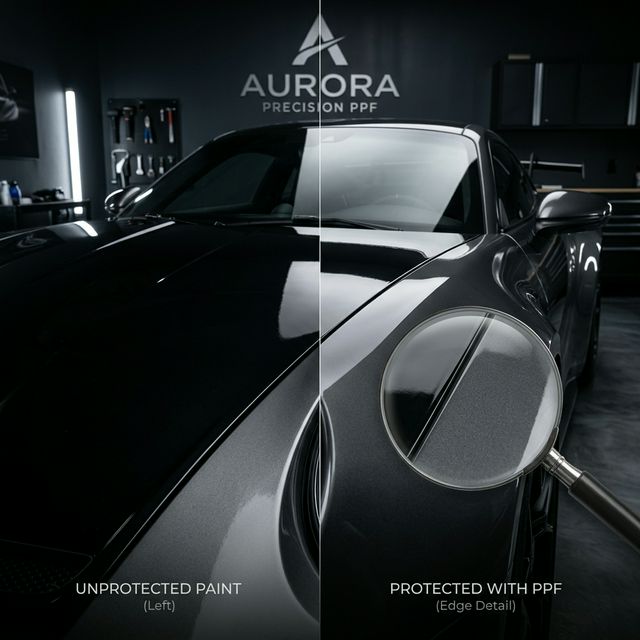
What Are the Drawbacks of Paint Protection Film? Honest Pros & Cons
Every drawback of PPF explained honestly: cost, texture change, limitations, maintenance restrictions, and removal—plus the counter-arguments that put each in perspective.
How Long Does PPF Last on a Car? Lifespan Guide for Calgary Drivers
Premium PPF lasts 7–10+ years, but Calgary's UV, salt, and temperature swings affect longevity. Brand tiers, maintenance tips, and when to replace.
How Does PPF Look After 5 Years? Real-World Aging & What to Expect
After 5 years on Calgary roads, premium PPF still looks showroom-fresh. We document what 5-year-old film actually looks like, from self-healing to clarity.