
Clear Bra in Calgary: Everything You Need to Know About Modern PPF
Quick answer: 'Clear bra' and 'PPF' refer to the same product — modern paint protection film has evolved dramatically from the thick, yellowing clear bras of the early 2000s. Today's films feature self-healing top coats, 99%+ optical clarity, and 10-year warranties — nothing like the old technology that earned a bad reputation.
Key Takeaways
- 'Clear bra' and 'PPF' refer to the same product — modern paint protection film has evolved dramatically from the thick, yellowing clear bras of the early 2000s.
- Today's films feature self-healing top coats, 99%+ optical clarity, and 10-year warranties — nothing like the old technology that earned a bad reputation.
- If someone had a bad experience with 'clear bra' years ago, modern PPF technology has solved every one of those legacy problems.
- The term 'clear bra' is still the most common Calgary search term, but professionals call it PPF or paint protection film.
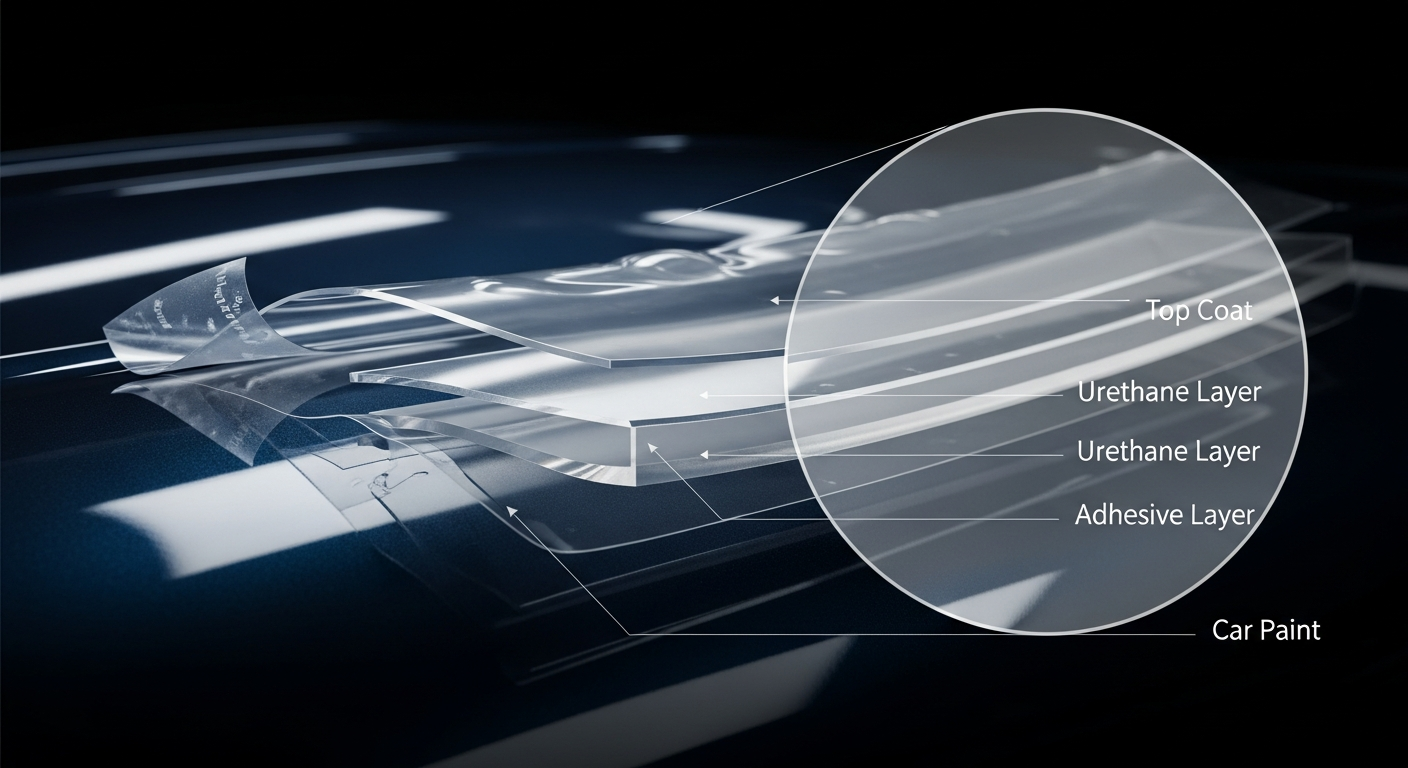
A "clear bra" is paint protection film (PPF) — a transparent, self-healing urethane layer bonded to your paint to absorb rock chips, scratches, and chemical damage. "Modern PPF" simply means today's version of that same product, now optically clear and far tougher than the early clear bras it's named after. "I had clear bra on my last car and it turned yellow." We hear this almost every week from Calgary drivers who had bad experiences with early-generation protective films. That negative experience has made thousands of vehicle owners in Calgary skeptical of paint protection film — but the technology of 2026 has absolutely nothing in common with what was available even 10 years ago.
If you have been avoiding PPF because of a "clear bra" horror story, this guide is specifically for you. We will explain how the technology has transformed, why every problem from the old days has been engineered out of existence, and why the product that once earned a bad reputation is now the most effective paint protection technology available.
A Brief History: How "Clear Bra" Became PPF
The original "clear bra" was developed in the 1960s by the U.S. military to protect helicopter rotor blades from debris damage in Vietnam. The technology migrated to automotive use in the late 1980s, initially as thick PVC strips applied only to the front bumper — literally a transparent "bra" for the car's nose.
First Generation: PVC Film
Thick, rigid PVC material. Yellowed within 12–18 months. Visible edges. Limited to bumpers and hood fronts. Difficult and messy removal with adhesive residue left behind. This is the "clear bra" experience most people remember.
Second Generation: Early TPU Film
Switch from PVC to thermoplastic polyurethane (TPU). Major improvement in clarity and flexibility. UV stabilizers added to prevent yellowing. First computer-cut patterns for specific vehicles. Still no self-healing capability.
Current Generation: Self-Healing TPU (3M Scotchgard Pro)
Patented elastomeric self-healing top coat that repairs scratches within minutes. 99.2% optical clarity — invisible even on white and silver paint. 8-mil thickness for flexibility on complex curves. Clean, residue-free removal. 10-year transferable warranty. Full-body coverage capability.
Every Old Problem, Solved
The complaints people had about "clear bra" were legitimate at the time. Here is how modern PPF has addressed each one:
"It turned yellow after a year"
Solved. Modern TPU films include integrated UV inhibitors that prevent discoloration for the entire 10-year warranty period. Modern premium PPF has been tested under accelerated UV exposure equivalent to 15 years of Calgary sun with zero yellowing.
"You could see the edges everywhere"
Solved. Modern installation techniques wrap film edges around body panel boundaries, making seams completely invisible. Combined with 99.2% clarity film, the protection is undetectable on the vehicle. Read more about proper edge technique in our installer guide.
"It peeled off in the car wash"
Solved. Modern pressure-sensitive adhesives bond permanently when properly cured (12–18 hours in a controlled environment). Edge-wrapping eliminates the exposed seams that car wash brushes used to catch. Touchless car washes are completely safe for modern PPF.
"Removing it damaged my paint"
Solved. Modern adhesive systems are designed for clean release. When professionally removed, the film lifts off with zero adhesive residue and zero clear coat damage. The paint underneath is often in pristine condition because the film has shielded it from UV, chemicals, and physical damage.
"Scratches were permanent and ugly"
Solved. Self-healing elastomeric top coats automatically repair light scratches and swirl marks when exposed to heat — sunlight, warm water, or a heat gun. A scratch that would be permanent on bare paint literally vanishes from the film surface within 15–30 minutes.
Self-Healing Technology: How It Actually Works
The self-healing top coat is the feature that most dramatically separates modern PPF from old clear bra. Here is the science behind it:
The film's outermost layer is an elastomeric polymer — a molecular structure that returns to its original shape when disrupted. When a light scratch breaks the surface tension, the polymer chains are displaced but not severed. Heat energy (from sunlight, warm water, or a heat gun) provides enough molecular mobility for the chains to reflow back into their original position, effectively erasing the scratch.
This self-healing works on surface-level scratches and swirl marks — the kind you get from automatic car washes, light brushes against bushes, and daily driving wear. It does not repair deep gouges that penetrate through the full film thickness, but those deep scratches would have gone through bare paint anyway. The film absorbs the damage that would otherwise require expensive paint correction.
Why Calgary Drivers Specifically Need PPF
Calgary's driving environment is among the most hostile to automotive paint in Canada. The combination of factors makes PPF not a luxury but a practical investment:
- Gravel-intensive highways — Deerfoot Trail, Stoney Trail, and Highway 2 are constantly peppered with aggregate from both gravel trucks and City of Calgary road maintenance.
- Temperature extremes — From +35°C in summer to -40°C in winter, a 75-degree swing that stresses every exposed surface on your vehicle.
- Road chemical exposure — Calcium chloride and road salt corrode unprotected clear coat surfaces throughout the winter months.
- Intense UV exposure — Calgary receives more sunshine hours annually than Montreal, Toronto, or Vancouver, accelerating paint oxidation and fading.
- High vehicle values — Calgary has one of the highest average vehicle values in Canada, making paint protection a proportionally smart investment.
In our Calgary studio, the cars we wrap most for clear bra are daily-driven SUVs and trucks that live on Deerfoot and Stoney Trail — the vehicles taking the worst of the gravel-truck spray. When owners come back at trade-in time, we peel the film and the bumper underneath looks showroom-fresh, while the same panel on an unwrapped twin is sandblasted with stone chips. The other pattern we see every spring is winter salt: drivers who skipped PPF show up in March with etched lower panels, and that's exactly the damage a front-end wrap absorbs instead of your clear coat.
The Bottom Line: Give Modern PPF a Second Chance
If your impression of paint protection film is based on an experience from 2010 or earlier, you are making decisions based on outdated technology. Modern PPF is as different from old clear bra as a smartphone is from a flip phone — it shares a lineage, but the capability gap is enormous.
At Obsidian Auto, we invite skeptics to visit our studio and see the difference firsthand. We will show you installed vehicles, demonstrate self-healing in real time, and let you feel the difference between old PVC film and modern self-healing TPU. For pricing, see our complete cost guide. Ready to move forward? Book your consultation today.
Ready to Protect Your Vehicle from Rock Chips?
Join 705+ Calgary drivers who trust Obsidian Auto for PPF installation
Serving Calgary and surrounding areas • Free Uber shuttle with every service
| Feature | Old Clear Bra (Pre-2015) | Modern PPF (3M Scotchgard Pro) |
|---|---|---|
| Yellowing | YES — within 12–18 months | NO — UV-stabilized for 10+ years |
| Self-Healing | NO | YES — scratches disappear with heat |
| Optical Clarity | ~93% (noticeable haze) | 99.2% (virtually invisible) |
| Thickness | 12+ mil (thick, rigid) | 8 mil (flexible, conformable) |
| Edge Finish | Thick visible edges | Invisible wrapped edges |
| Removal | Difficult, adhesive residue | Clean removal, no residue |
| Warranty | 1–3 years | 10 years (transferable) |
Frequently Asked Questions
Ready to Protect Your Vehicle?
Get a quote from Calgary's most trusted detailing studio. We use only the best materials and back our work with industry-leading warranties.
Get A QuoteRelated Intelligence
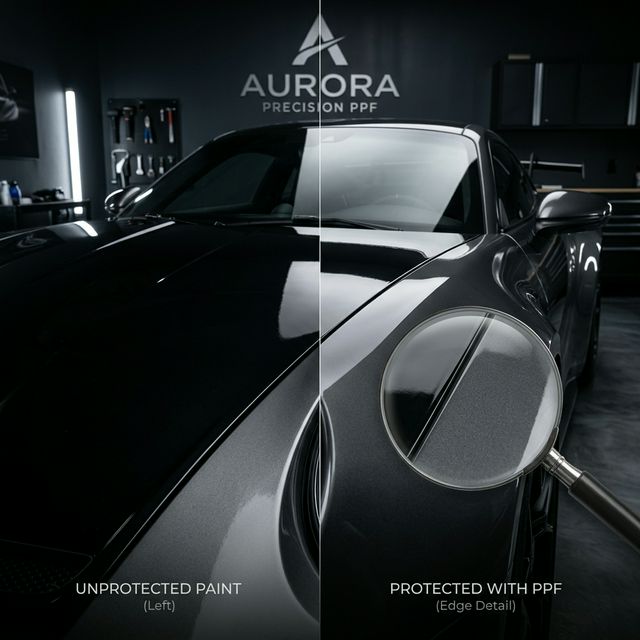
What Are the Drawbacks of Paint Protection Film? Honest Pros & Cons
Every drawback of PPF explained honestly: cost, texture change, limitations, maintenance restrictions, and removal—plus the counter-arguments that put each in perspective.
How Long Does PPF Last on a Car? Lifespan Guide for Calgary Drivers
Premium PPF lasts 7–10+ years, but Calgary's UV, salt, and temperature swings affect longevity. Brand tiers, maintenance tips, and when to replace.
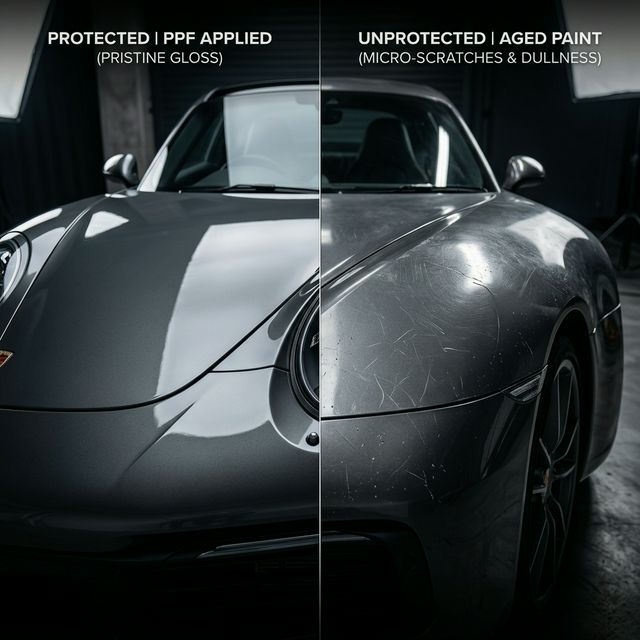
How Does PPF Look After 5 Years? Real-World Aging & What to Expect
After 5 years on Calgary roads, premium PPF still looks showroom-fresh. We document what 5-year-old film actually looks like, from self-healing to clarity.