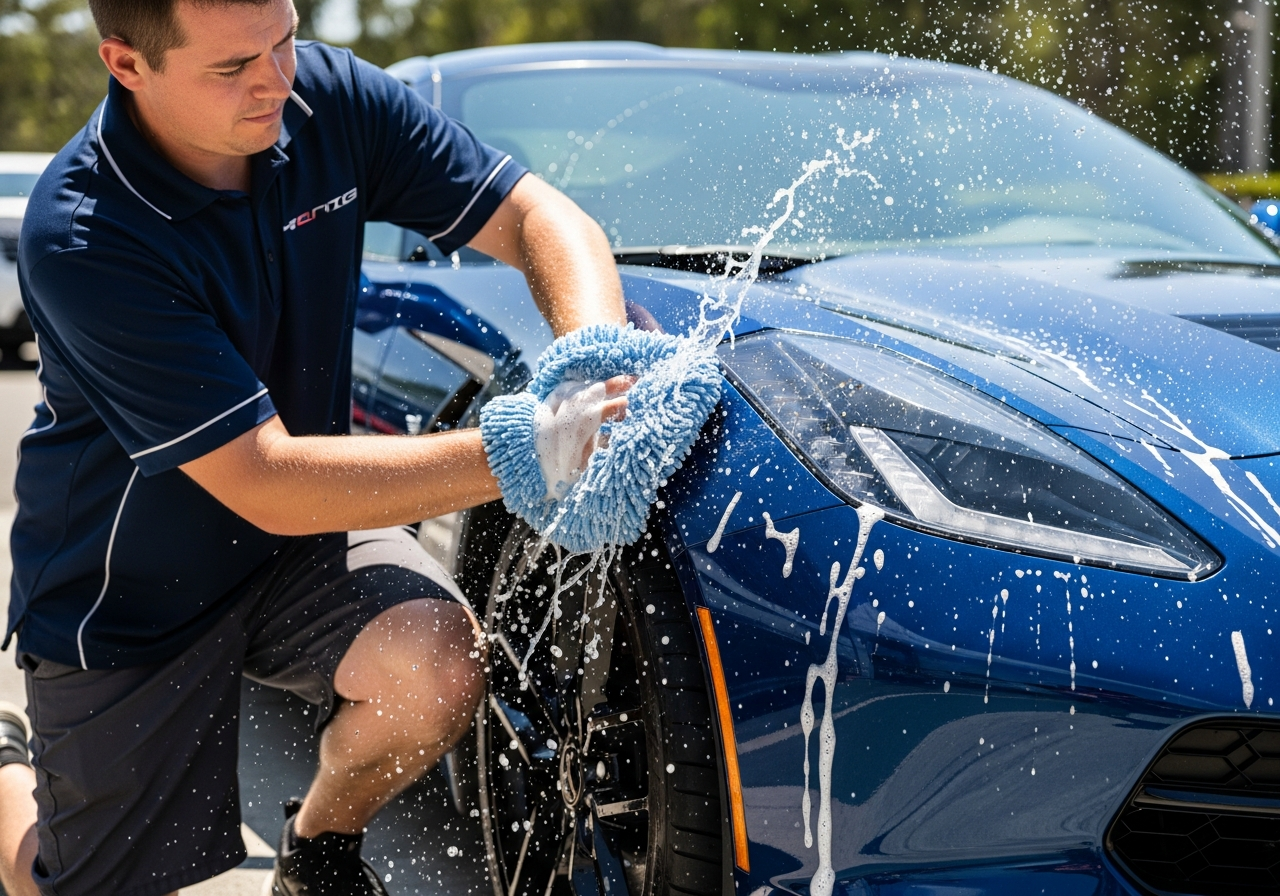
How to Safely Remove Bugs, Tar, and Sap from PPF Without Damage
Quick answer: Bug splatter, tree sap, and road tar must be removed within 24–48 hours — extended exposure etches the PPF top coat permanently. Never dry-scrape deposits off PPF — always soften first with warm water or an approved PPF-safe bug remover.
Key Takeaways
- Bug splatter, tree sap, and road tar must be removed within 24–48 hours — extended exposure etches the PPF top coat permanently.
- Never dry-scrape deposits off PPF — always soften first with warm water or an approved PPF-safe bug remover.
- Isopropyl alcohol (IPA) at 50% dilution is safe for tar spots on PPF, but avoid acetone and petroleum-based solvents.
- PPF's self-healing top coat recovers from light surface abrasion during cleaning, but aggressive scrubbing leaves permanent damage.
Bugs, tar, and tree sap can permanently etch paint protection film — but only if you handle them incorrectly. The safe answer in every case is the same: soften first with warm water or an approved PPF-safe product, then wipe gently. Never dry-scrape, never use acetone, and never wait more than 48–72 hours. PPF gives you roughly twice the reaction window of bare paint; use it.
Driving through bug season on Highway 2 will coat your vehicle in insect residue in minutes. Urban parking under trees deposits sticky sap. Highway construction zones fling road tar. Every one of these contaminants can damage the film if handled incorrectly — but PPF gives you far more forgiveness than bare paint if you know the right removal techniques.
Why Speed Matters: The Etching Timeline
Every contaminant has a clock running on it. Here is how long you have before the damage becomes difficult or impossible to reverse:
| Contaminant | Safe Window (PPF) | Safe Window (Bare Paint) | Removal Difficulty |
|---|---|---|---|
| Bug Splatter | 48–72 hours | 24 hours | Easy when fresh |
| Bird Droppings | 24–48 hours | 4–12 hours | Moderate — always acidic |
| Tree Sap | 2–5 days | 1–2 days | Difficult — requires solvent |
| Road Tar | 1–2 weeks | 3–5 days | Moderate — requires IPA/tar remover |
| Calcium Chloride | 5–7 days | 2–3 days | Easy — dissolves in water |
Notice that PPF gives you roughly 2x more time than bare paint for every contaminant. This is one of the underrated benefits of film — it provides a buffer zone for busy people who cannot wash their car immediately.
Bug Splatter Removal: Step-by-Step
Calgary's bug season (May through September) is intense, especially on highways between Calgary and Red Deer. Here is the proper technique:
Wet a plush microfiber towel with warm water and lay it flat over the bug-covered area. Leave it for 2–3 minutes. The warmth and moisture soften the dried protein bonds, making removal effortless.
After soaking, gently wipe in a single direction using a clean section of the towel. Do not scrub back and forth — circular scrubbing concentrates pressure points and creates swirl-pattern scratches that may exceed the self-healing threshold.
For dried-on splatter that resists warm water, spray a dedicated bug remover (Chemical Guys Bug & Tar Remover, or similar PPF-safe product) directly on the residue. Wait 60 seconds, then wipe.
Rinse the cleaned area with clean water to remove any bug remover residue. Dry with a separate clean microfiber towel. Any light scratches from the cleaning process will self-heal in direct sunlight.
Road Tar Removal: The IPA Method
Road tar deposits from construction zones and freshly paved roads bond aggressively to any surface. On PPF, the removal process is straightforward but requires the right solvent:
- Safe: Isopropyl alcohol (IPA) at 50% dilution — dissolves tar without affecting the film.
- Safe: PPF-safe tar remover sprays — formulated to avoid petroleum solvents.
- Unsafe: WD-40 — contains petroleum distillates that can soften the film adhesive.
- Unsafe: Acetone / nail polish remover — will destroy the self-healing top coat.
- Unsafe: Gasoline — dissolves the film material itself.
Apply IPA to a microfiber towel (not directly to the film), place it over the tar deposit for 30 seconds, then gently wipe. Repeat for stubborn spots. Follow up with warm water rinse.
Tree Sap Removal: Patience Required
Tree sap is the hardest contaminant to remove because it hardens into a resinous bond. The key is chemical softening, not mechanical force:
- Apply IPA (50% dilution) or dedicated sap remover directly to the sap globule
- Cover with a warm, damp microfiber towel for 3–5 minutes
- The sap should soften enough to gently roll off with the towel
- For fully hardened sap (left for weeks), repeat the process 2–3 times
- Never use a fingernail, plastic tool, or razor to pry dried sap — this gouges the film irreversibly
Bird Droppings: The Most Urgent Contaminant
Bird droppings are the most chemically aggressive common contaminant. The uric acid concentration (pH 3–4) begins etching clear coat within hours and can mark PPF within 24–48 hours in warm weather. Remove bird droppings as your highest priority:
Dried droppings contain grit and uric acid crystals. Wiping them dry grinds these particles into the film surface, creating scratches loaded with acid. Always soak first with warm water for 2–3 minutes, then lift away gently with a wet microfiber towel.
The PPF Advantage: Your Built-In Safety Net
Here is the perspective that makes PPF owners sleep better: every contaminant that etches or damages PPF would have caused worse, permanent damage to bare paint. When bug splatter etches the film, a professional can buff it out or, in extreme cases, replace an individual panel section. When bug splatter etches bare paint, you need hundreds to thousands in repaint — and even then, factory colour matches are rarely perfect.
In our Calgary studio, the worst summer damage we see arrives on vehicles that spent two or three weeks on Highway 2 between Calgary and Red Deer without a wash stop. The bugs bake on in the summer heat and the acidic residue starts cutting into the film's top coat within days. Yet even then, a proper softening-soak-and-wipe protocol — sometimes repeated two or three times — rescues the film without a scratch. The same splatter load on bare paint would have needed machine polishing at minimum.
PPF buys you time, forgiveness, and repairability. For complete maintenance guidelines, read our comprehensive PPF care guide. For questions about contaminant protection during Calgary winters, see our salt and calcium protection article.
Ready to Protect Your Vehicle from Rock Chips?
Join 705+ Calgary drivers who trust Obsidian Auto for PPF installation
Serving Calgary and surrounding areas • Free Uber shuttle with every service
Frequently Asked Questions

Ready to Protect Your Vehicle?
Get a quote from Calgary's most trusted detailing studio. We use only the best materials and back our work with industry-leading warranties.
Get A QuoteRelated Intelligence
How to Clean and Maintain PPF in Calgary: The Definitive Care Guide
Protect your investment. The dos and don'ts of washing PPF, choosing soaps, and using ceramic boosters.
Can You Go Through a Carwash with PPF Film? The Complete Answer
Touchless car washes are safe. Brush washes are not. Complete PPF car wash guide covering wash types, winter tips, products to avoid, and maintenance advice.
Can I Wash My Car After PPF? Post-Installation Care Timeline
Wait 48 hours, then gentle hand wash only for 7 days. Complete post-PPF washing timeline with winter cure adjustments and bubble guidance.