
Truck PPF & Undercoating in Calgary: Protect Your Truck
Quick answer: A truck faces two different threats from two directions: gravel rock chips hammering the front end and high panels, and salt-brine corrosion attacking the underbody and frame. Paint protection film handles the first; undercoating handles the second. Protecting one and ignoring the other leaves half the truck exposed.
Key Takeaways
- A truck faces two different threats from two directions: gravel rock chips hammering the front end and high panels, and salt-brine corrosion attacking the underbody and frame. Paint protection film handles the first; undercoating handles the second. Protecting one and ignoring the other leaves half the truck exposed.
- On a truck, PPF earns its keep most on the panels that catch gravel — the hood, fenders, front bumper, A-pillars, mirrors, and the rocker panels that get sandblasted by your own tires. Obsidian Auto installs only 3M, STEK, SunTek, and GSWF film, with PPF starting from $399.
- Alberta road salt — magnesium-chloride and calcium-chloride brine plus traction sand — is what rusts truck frames, brake lines, and box seams from the bottom up. Rubberized undercoating seals the underbody; cavity wax creeps into the boxed frame rails a spray can't reach. A new truck in Calgary benefits from undercoating before its first winter, not after rust starts.
- PPF and undercoating are commonly done together because they cover the whole vehicle — top-side impact and underbody corrosion — in one visit. Obsidian Auto's PPF Essentials plus rubberized undercoating bundle starts from $899. (All figures sourced from brand-facts: PPF from $399, undercoating bundle from $899.)
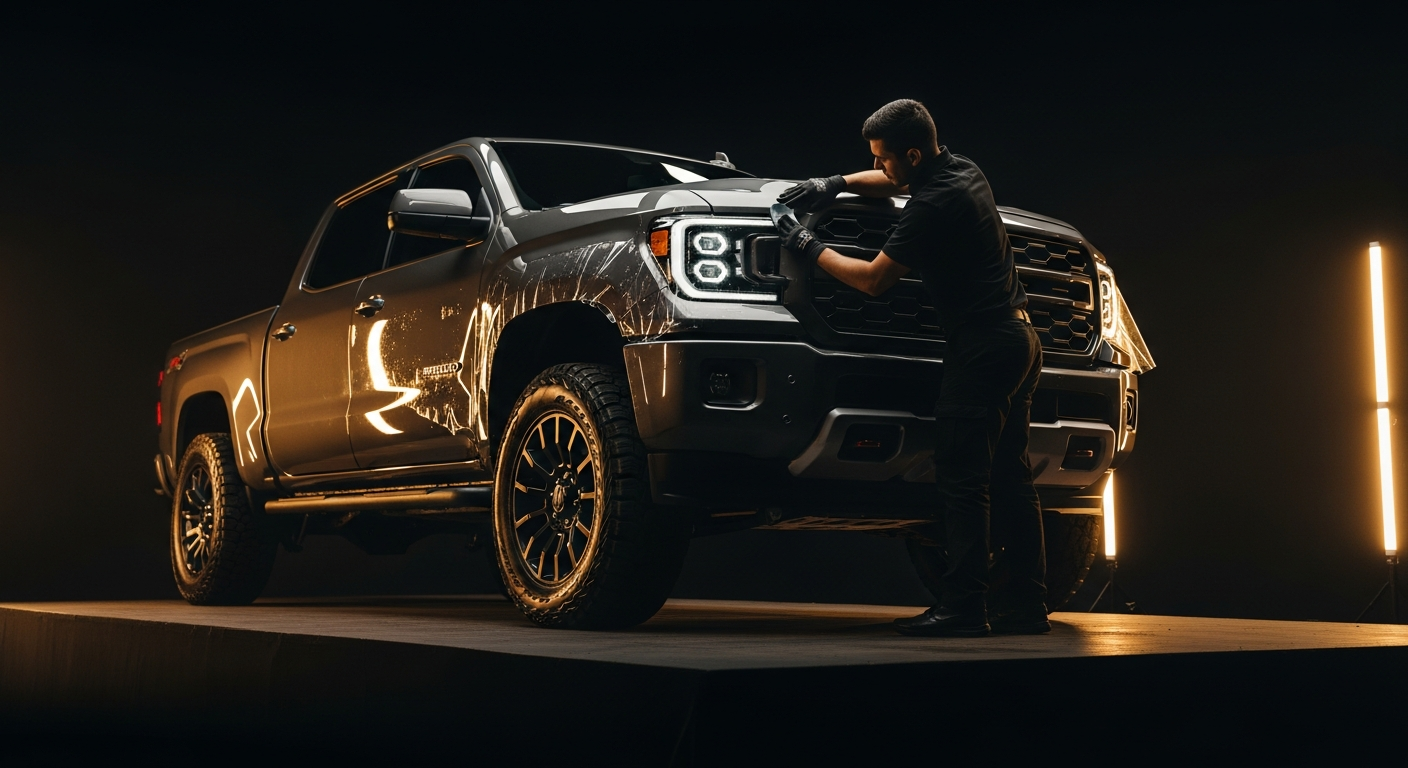
A truck in Calgary takes a beating from two directions at once: gravel and stone chips hammer the front end and rockers on Deerfoot and the mountain highways, while liquid road salt eats at the frame and underbody all winter. A car owner can usually pick one protection product and call it done — a truck owner really can't. This guide covers what paint protection film and undercoating each defend against, which panels and which products matter most, and how work trucks, lifted builds, and daily 4×4s should prioritise differently.
The short answer: Trucks face two threats from two directions — gravel rock chips on the front end and rockers, and salt-brine corrosion under the truck. PPF stops the first; undercoating stops the second. On the body, film the hood, fenders, bumper, A-pillars, and rockers; underneath, seal the exposed underbody with rubberized coating and treat the boxed frame rails with creeping cavity wax. Obsidian Auto installs 3M, STEK, SunTek, and GSWF film with PPF from $399, and the PPF Essentials + rubberized undercoating bundle starts from $899. Protect a new truck before its first Alberta winter — not after the rust starts.
Below we break down the two threats, the panel priorities for truck PPF, the undercoating products and what each one reaches, how different kinds of truck should prioritise, and why bundling the two makes sense here. For exact figures, our paint protection film service and undercoating and rust-proofing service pages lay out the packages, and our PPF cost in Calgary page details where each tier sits.
Why Trucks Need Different Protection Than Cars
The reason a truck needs a different protection plan than a sedan comes down to geometry and use. A truck sits tall and runs a big, square front end straight into highway debris, so the leading edges catch far more gravel than a low car ever does. Its tires are wider and further out, so they fling grit and stone backward onto the rockers and lower doors — a truck sandblasts its own paint. And underneath, a truck has a ladder frame with boxed rails, exposed brake and fuel lines, and a lot of seams and cavities sitting right in the spray of brine kicked up off the road.
Add in how trucks actually get used here — gravel job sites, acreage driveways, towing on the open highway, off-road weekends — and you have a vehicle that takes more top-side impact and more underbody exposure than almost anything else on Calgary roads. That's why the right answer for a truck is rarely a single product. It's film where the gravel hits and corrosion protection where the salt collects.
The Two Threats: Rock Chips and Salt-Brine Corrosion
Every protection decision on a truck maps back to one of two threats. Knowing which is which keeps you from over-spending on one while leaving the other exposed.
Where a Calgary Truck Actually Takes Damage (our rough ranking, illustrative)
The first threat is impact: gravel and stone chips that strike the painted panels and chip the clear coat and colour. These land on the front end, the hood, the rockers — the top-side surfaces you see. The second is corrosion: Alberta's magnesium-chloride and calcium-chloride winter brine, which stays liquid at low temperatures, creeps into seams and cavities, and rusts the frame, brake lines, fasteners, and box from the bottom up. They're different problems needing different products — and a truck gets hit by both, every season.
Truck PPF: Which Panels Matter Most
Paint protection film is a thick, self-healing urethane layer that bonds to your paint and absorbs gravel strikes so the chip never reaches the colour. On a truck, the value is in covering the panels that actually get hit — and on a tall vehicle that throws its own grit, that list is a little different from a car's.
- Front bumper and grille. The first surfaces to meet highway debris — the highest-impact zone on the whole truck.
- Full hood and leading edge. The classic chip magnet; a full hood beats a partial "bra"-style cap because chips land well past the front 18 inches at highway speed.
- Fenders, A-pillars and mirrors. Gravel that clears the bumper sandblasts the fenders and wraps up the pillars and mirror backs.
- Headlights. A chipped or hazed headlight is expensive to replace; film keeps the lens clear.
- Rocker panels and lower doors. The truck-specific priority — your own front tires throw grit straight back here, so rockers pit and chip even when nothing hits the front.
- Cab corners and box leading edge. For tow rigs and job-site trucks, the cab corners and the front of the box take real abuse worth filming.
The most popular truck coverage is a full front end — full hood, full fenders, bumper, mirrors, A-pillars — plus rockers, which covers the large majority of where a truck genuinely gets chipped. We install only 3M, STEK, SunTek, and GSWF film, matched to how you drive, with PPF packages from $399. If your truck is brand-new, our guide to protecting a new vehicle with PPF in Calgary explains why filming before the first chip lands is the right move.
Undercoating for Trucks: Rubberized, Oil & Cavity Wax
Undercoating is the corrosion half of the job, and it isn't a single product — different formulas reach different parts of the truck. The strongest protection for a Calgary truck usually combines a barrier coating on the exposed underbody with a creeping treatment inside the cavities a spray can't reach.
| Rubberized Undercoating | Oil / Creeping Spray | Cavity Wax | |
|---|---|---|---|
| What it is | Thick, durable sprayed barrier | Penetrating fluid that stays mobile | Wax-based creeping treatment |
| Best on | Exposed underbody, floor pans, wheel wells | Seams, panel gaps, hidden surfaces | Inside boxed frame rails, doors, rockers |
| Reaches cavities | No | Yes | Yes |
| Abrasion resistance | High — resists stone & grit | Low — washes/wears over time | Low — protected inside cavities |
| Self-heals chips | No | Yes | Yes |
| Best for a truck | Underbody abrasion zones | Annual maintenance top-up | Frame & box interiors |
The takeaway: a rubberized coating gives the exposed underbody a tough barrier against brine and the constant stone-peppering a truck takes, while cavity wax or a creeping oil gets inside the boxed frame rails, rockers, and doors where a lot of truck rust actually starts and where no sprayed barrier can reach. Used together, you get exclusion where the metal is exposed and displacement where it's hidden. Our deep-dives on rubberized vs oil undercoating in Calgary and whether undercoating is worth it here go further into the trade-offs, and the undercoating and rust-proofing service page lists the packages.
Work Truck vs Lifted vs Daily 4×4: What to Prioritise
Not every truck needs the same plan. How yours is used should decide where the protection budget goes first — the same question we walk through for any Calgary vehicle in PPF vs. undercoating: where to spend first when budget is limited.
The Pros
- WORK TRUCK: lead with undercoating and cavity wax — job-site grit, gravel acreage, and full winters punish the underbody hardest; add PPF on the bumper, hood leading edge, and rockers that take the worst stone strikes.
- LIFTED / SHOW TRUCK: lead with full-front-end PPF and rockers to keep the paint flawless for shows and resale; pair with rubberized undercoating since lifted trucks see more off-road grit and exposed underbody.
- DAILY 4×4 / FAMILY TRUCK: the balanced bundle — front-end PPF plus rubberized undercoating before winter covers the chips you see and the salt you don't, which is exactly what the $899 bundle targets.
The Cons
- SKIPPING UNDERCOATING on a work truck: the underbody is its most-abused area; leaving it bare through Alberta winters is the fastest path to frame and brake-line rust.
- PARTIAL "BRA"-ONLY PPF on a lifted build: chips land well past the front cap at highway speed, so a short hood strip leaves most of the impact zone exposed.
- WAITING on a daily 4×4: undercoating a truck that already has surface rust traps moisture instead of excluding it — protect it new, not after the first salty winter.
Calgary-Specific: Gravel Highways and Magnesium-Chloride Winters
Both threats to a truck are amplified by exactly where you drive. Calgary's geography and winter road treatment are why truck protection sells so hard here in particular.
- Gravel highways. Deerfoot, Stoney Trail, and Highway 1 out to the mountains carry loose grit and gravel on the shoulders and lanes year-round; a tall truck running these at speed takes a steady stream of stone strikes to the front end and a constant tire-thrown peppering of the rockers.
- Magnesium- and calcium-chloride brine. Calgary treats winter roads with liquid chloride brine plus traction sand for roughly half the year. Unlike old-school dry rock salt, brine stays wet and active at low temperatures, so it clings to the underbody, runs into seams, and keeps corroding the frame, brake lines, and box long after the road looks dry.
- Chinook freeze-thaw. The rapid thaw-then-refreeze chinook cycle works that salty moisture deeper into every gap and cavity, which is precisely why creeping cavity treatment — not just a surface coat — matters on a truck here.
Why a New Truck Should Be Protected Before Its First Winter
Undercoating bonds best to clean, rust-free metal. Applied to a new truck's underbody before any brine has touched it, the product seals sound metal and excludes salt from the start. Wait until the truck has run a few salty Calgary winters and you're coating over surface rust — which traps moisture against the metal instead of keeping it out. The same logic applies to PPF: film protects the paint it covers, so the value is in filming a flawless panel before the first chip, not patching after. With trucks, protecting early is the whole game.
Bundling PPF + Undercoating: Top-Side and Underbody in One Visit
Because PPF and undercoating defend opposite ends of the truck against completely different threats, they pair naturally — and doing both in one studio visit means the whole vehicle leaves protected, top to bottom, with the truck booked in only once. Both jobs also want a clean, controlled bay: film needs a dust-free surface to bond properly, and undercoating needs the underbody cleaned and dried before anything is applied, which is far easier in a heated studio than a driveway in a Calgary winter. Booking both does raise one question the bundle price does not answer — which of the two jobs has to go first, and how the film edges get masked.
Obsidian Auto's PPF Essentials plus rubberized undercoating bundle starts from $899 — a sensible starting point for a daily-driven truck heading into the salt season. From there the PPF coverage scales up to a full front end with rockers, and the undercoating scales up with cavity-wax frame treatment for a hard-working truck. For where each piece sits on price, the PPF cost breakdown for Calgary covers the film side, and our car detailing service handles the decontamination wash a truck usually needs before film goes on.
How a Truck PPF + Undercoating Job Runs
To make the combined job concrete, here's the sequence a truck goes through in our Calgary studio when both protection layers are done together.
Wash & Underbody Clean
Step 1The truck gets a full decontamination wash up top and the underbody is pressure-cleaned and degreased to bare, sound metal — undercoating can only bond to a clean, dry surface, so this stage is non-negotiable.
Paint Prep & Panel Mapping
Step 2The painted panels are clayed and prepped, and the PPF coverage is mapped to your truck — front end, rockers, and any cab-corner or box-edge film matched to how the truck is used.
PPF Installation
Step 3Computer-cut 3M, STEK, SunTek, or GSWF film is applied to the mapped panels and worked down so edges seal and the self-healing layer covers every high-impact surface.
Rubberized Underbody Coating
Step 4The exposed underbody — floor pans, frame surfaces, wheel wells — gets a thick rubberized coating that seals the metal against brine and resists the stone-peppering a truck constantly takes.
Cavity Treatment & Cure
Step 5Creeping cavity wax is fogged into the boxed frame rails, rockers, and doors to displace moisture where the spray can't reach, then film and coatings are left to cure before the truck goes back into the salt.
Protect Your Truck, Top to Bottom
Bring your truck to our Calgary studio and we'll map the PPF coverage to where gravel actually hits it, recommend the right undercoating combination for Alberta winters, and quote it honestly — film from $399, PPF and rubberized undercoating bundled from $899.
Get Your Truck Protection QuoteThe Bottom Line for Calgary Truck Owners
A truck earns its keep by going where gravel and salt are worst — so it needs protection built for both. Film the panels gravel actually hits, seal the underbody against brine, and treat the cavities where rust hides, ideally before the first Alberta winter rather than after the damage shows. Whether you run a work truck, a lifted build, or a daily 4×4, the same rule holds: cover the top-side impact with paint protection film and the underbody with undercoating and rust-proofing, and you protect the whole truck — the parts you see and the parts you don't.
Ready to Protect Your Vehicle from Rock Chips?
Join 705+ Calgary drivers who trust Obsidian Auto for PPF installation
Serving Calgary and surrounding areas • Free Uber shuttle with every service
Frequently Asked Questions

Ready to Protect Your Vehicle?
Get a quote from Calgary's most trusted detailing studio. We use only the best materials and back our work with industry-leading warranties.
Get A QuoteRelated Intelligence

Best PPF Installer Calgary: How to Choose in 2026
The complete guide to finding Calgary's best PPF installer. 10 critical criteria, red flags to avoid, and why Obsidian Auto leads with 705+ reviews.
The Complete Calgary PPF Guide: Protecting Your Car from Road Salt & Gravel (2026)
The definitive 3,000+ word guide to PPF in Calgary. Covers STEK vs 3M vs SunTek, pricing breakdowns, installation process, maintenance, and Calgary-specific protection needs.
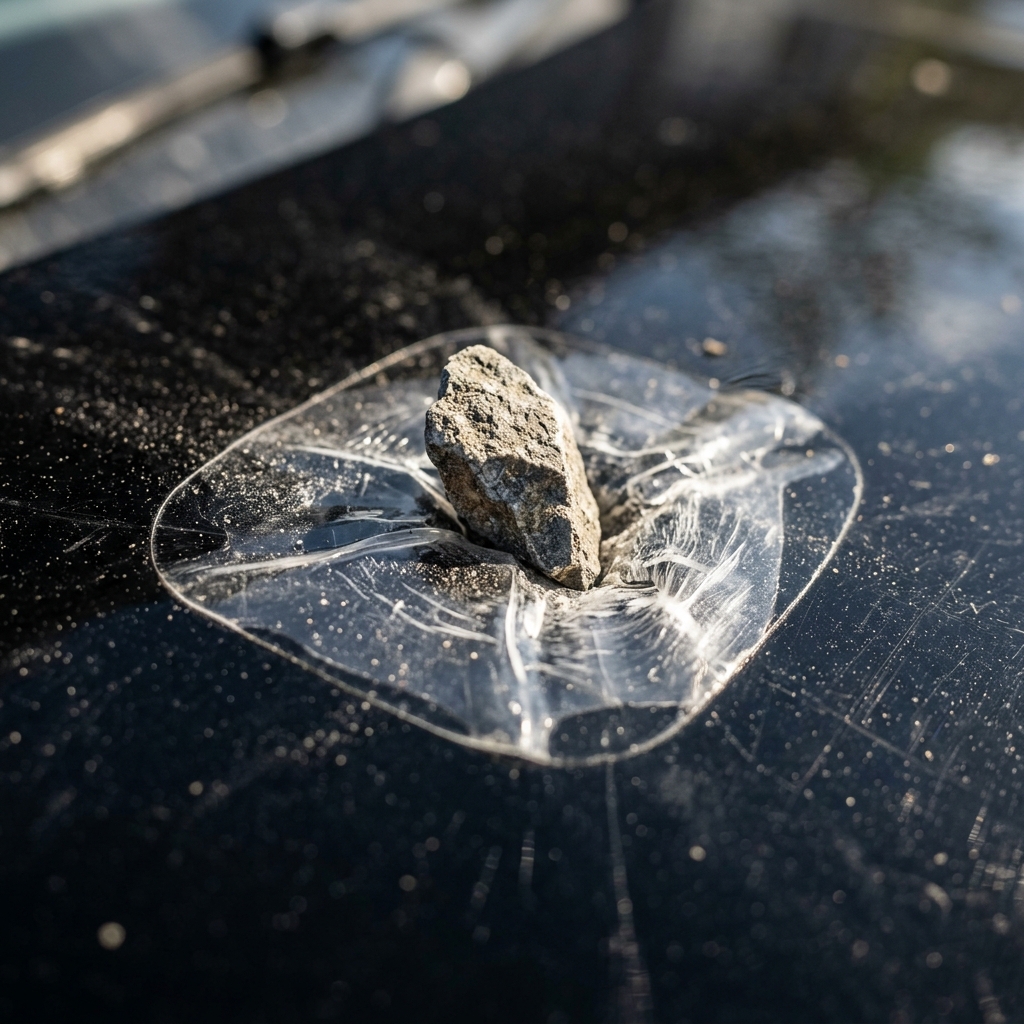
PPF Calgary: Is It Worth the Investment in 2026?
A deep dive into the financial math of rock chip repairs in Calgary vs. the cost of PPF. Understand the true ROI of protecting your paint.