
Windshield Protection Film in Calgary: Stop Rock-Chip Cracks
Quick answer: Windshield protection film is a thin, optically clear impact layer applied over your existing glass. It absorbs and disperses the energy of gravel and stone strikes so the kinetic hit that would normally star or crack the windshield is spread out instead — dramatically reducing the rock chips Calgary's gravel highways are notorious for.
Key Takeaways
- Windshield protection film is a thin, optically clear impact layer applied over your existing glass. It absorbs and disperses the energy of gravel and stone strikes so the kinetic hit that would normally star or crack the windshield is spread out instead — dramatically reducing the rock chips Calgary's gravel highways are notorious for.
- We install an ExoShield-grade film that is engineered to be several times more resistant to stone-chip impact than bare glass. It does not make a windshield bulletproof, but it turns the everyday gravel strike — the one that today leaves a chip and tomorrow becomes a spreading crack — into a non-event in the large majority of cases.
- Windshield film at Obsidian Auto starts at $495. That is a fraction of a modern windshield replacement, which on a vehicle with a heads-up display (HUD), rain sensors, or forward ADAS cameras frequently runs well over a thousand dollars once the glass, calibration, and labour are added up. One prevented replacement can pay for the film several times over.
- Deerfoot Trail, Stoney Trail, and the gravel-strewn drives out to the mountains on Highway 1 are exactly the conditions windshield film is built for. Loose stone thrown from trucks and winter traction gravel are the leading cause of cracked windshields here — which is why protecting the glass is one of the smartest, lowest-cost pieces of protection a Calgary driver can add.
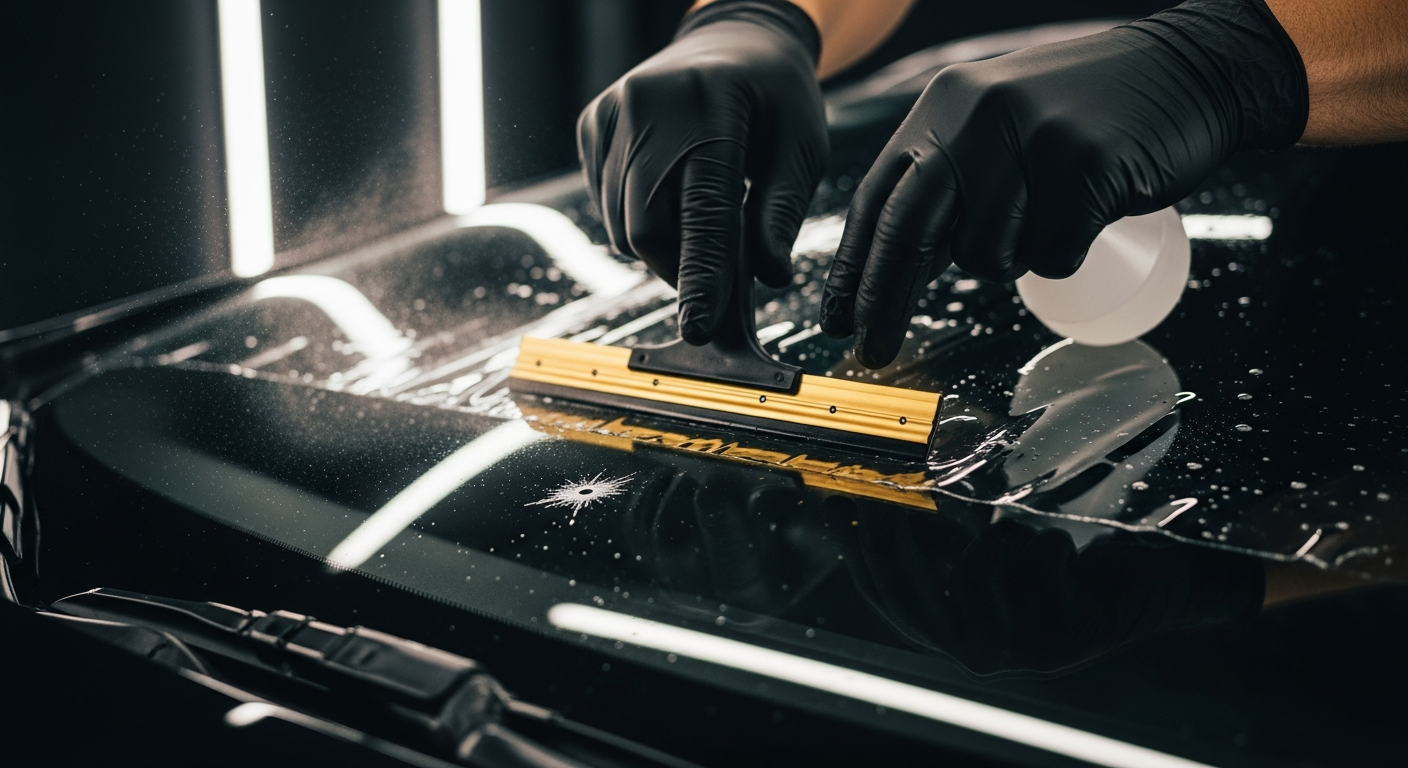
If you drive Calgary's highways for long enough, the moment is almost inevitable: a truck ahead on Deerfoot kicks up a stone, you hear the crack against the glass, and a small chip appears — the one that quietly spreads into a windshield-replacing crack over the next cold snap. Windshield protection film exists to stop that chain of events. This guide covers what the film is, why our gravel highways crack so many windshields, how it works, what it costs against a modern replacement, and whether it touches your visibility or sensors.
The short answer: Windshield protection film is an optically clear, impact-grade layer applied over your glass that absorbs and disperses the energy of gravel strikes — turning the everyday rock chip into a non-event in most cases. We install an ExoShield-grade film engineered to be several times more impact-resistant than bare glass, and it starts at $495 — a fraction of a modern windshield replacement, which on a HUD or ADAS vehicle routinely runs well over a thousand dollars once glass, labour, and sensor recalibration are added. On Calgary's gravel highways, it is one of the smartest low-cost protections you can add.
Below we break down the gravel-highway problem unique to Alberta driving, how the film actually disperses impact, the real cost comparison, and the visibility and sensor questions every owner asks. For the full service details, see our windshield protection film service in Calgary, which pairs naturally with paint protection film on the rest of the front end.
What Windshield Protection Film Is
Windshield protection film is a thin, optically clear layer applied directly over the outside of your existing windshield. Unlike a tint or a coating, its job is purely mechanical: it is an impact film, engineered to take the hit of a stone or piece of gravel and spread that energy out so the glass underneath survives unmarked. We install an ExoShield-grade film built specifically for this — a multi-layer construction that is several times more resistant to stone-chip impact than the windshield on its own.
The important framing is that this is a sacrificial shield, exactly like paint protection film is for your paint. The film is there to absorb the daily barrage of gravel, grit, and wiper wear so that your windshield — which is increasingly an expensive, sensor-laden piece of equipment — does not have to. When the film has eventually done its work, it is replaced, far more cheaply and easily than the glass it protected.
Why Calgary's Gravel Highways Crack Windshields
Cracked windshields are not bad luck in Calgary — they are a predictable consequence of the roads we drive. A handful of very local conditions make this one of the harder places in the country on automotive glass.
- Gravel-throwing highways. Deerfoot Trail, Stoney Trail, and the long gravel-strewn drives out to the mountains on Highway 1 are full of loose stone, much of it flung directly at your windshield by the trucks and traffic ahead at highway speed.
- Winter traction gravel. For half the year, the City coats the roads in traction sand and gravel to fight ice. That same grit gets picked up by tires and thrown at the cars behind, turning every winter commute into a low-level barrage against the glass.
- Construction and open prairie wind. Ongoing roadwork and the open, windy approaches into the city kick additional debris onto fast-moving traffic, adding to the strikes a windshield absorbs over a season.
The result is the familiar Calgary cycle: a stone leaves a small chip, a freeze-thaw chinook cycle works moisture into it, and the chip migrates into a crack that would fail an Alberta inspection and demands a full replacement. Windshield film is aimed squarely at breaking that cycle at step one.
How the Film Works: Dispersing the Impact
A rock chips a windshield because all the energy of the strike lands on a single tiny point of rigid glass, and the glass fractures to release it. Windshield protection film changes the physics of that moment. The film is a tough, slightly flexible layer, so when a stone hits, the film flexes and spreads the impact energy across a much wider area before it ever reaches the glass — the same principle that lets a flexible shield absorb a blow a rigid one would shatter under.
Because that energy is dispersed rather than concentrated, the everyday gravel strike that would have starred bare glass instead does nothing more than tap the film. The ExoShield-grade film we use is rated several times more impact-resistant than the windshield alone, which is why the chips and spreading cracks Calgary roads routinely cause become far less frequent. It is not a force field — a large enough rock at speed can still defeat any glass — but the constant low-level gravel that accounts for most cracked windshields here is exactly what it neutralises.
The Pros
- Absorbs and disperses gravel-strike energy so most everyday rock chips never crack the glass.
- Several times more impact-resistant than a bare windshield, engineered specifically for stone-chip defence.
- Protects expensive HUD/ADAS/acoustic glass from the strikes that trigger costly replacements.
- Sacrificial and renewable — replaced cheaply and easily, with no ADAS recalibration required.
The Cons
- DOESN'T make a windshield indestructible — a large enough rock at highway speed can still defeat any glass.
- DOESN'T repair an already-chipped or cracked windshield — it is preventative and goes on intact glass.
- DOESN'T replace insurance — it reduces the odds of needing a claim rather than removing the risk entirely.
- DOES need professional, edge-to-edge fitment around sensors and the HUD zone to perform and look right.
Cost vs. a Modern Windshield Replacement
The case for windshield film is almost entirely about the maths. The film starts at $495 at Obsidian Auto. A replacement windshield, on the other hand, is no longer a cheap pane of glass — it is one of the more expensive panels on a modern car to swap. The maths only closes once you know whether a policy picks up that replacement at all.
The reason is technology. A current windshield often carries a heads-up display, acoustic lamination, a heated wiper-park strip, and the forward-facing camera that runs lane-keep assist and automatic emergency braking. Replacing it means the glass itself, the labour to remove and reset it, and a mandatory ADAS recalibration so those safety systems read accurately again. Stack those up and a modern windshield replacement frequently runs well past a thousand dollars — and considerably more on a HUD or heavily sensor-equipped vehicle.
| With Windshield Film | Without Film | |
|---|---|---|
| Up-front cost | From $495 (one time) | $0 — until a chip cracks |
| Everyday gravel strike | Absorbed & dispersed | Chips, then spreads to a crack |
| Risk of replacement | Greatly reduced | High on Calgary gravel highways |
| Replacement on HUD/ADAS glass | Largely avoided | Often $1,000–$3,000+ with recalibration |
| Insurance claims / deductible | Fewer claims, no claim history | Deductible — or the whole bill, if a glass endorsement applies |
| When worn out | Replace the film, cheaply | Replace the whole windshield |
One Prevented Replacement Pays for the Film Several Times Over
On a vehicle with a HUD or forward ADAS cameras, a single cracked-windshield replacement with recalibration can cost two to six times the price of the film that would have prevented it. For a Calgary driver who lives on gravel highways, that is not a maybe — it is a question of when. The film turns a likely four-figure bill into a one-time $495 line item.
Visibility, Sensors, and ADAS Cameras
The most common hesitation is whether a film over the glass will get between you and the road. With a proper installation, it does not. The film is engineered for high optical clarity and light transmission — installed correctly, edge to edge, it is invisible in use, with no haze, distortion, or glare difference day or night. You see exactly what you saw through the bare glass.
Sensors are handled deliberately during the install. Rain sensors, light sensors, the forward ADAS camera, and the heads-up-display zone are all accounted for: the film is precisely cut and fitted so those systems keep reading through it as the manufacturer intended. This is the part that separates an experienced studio from a rushed job — clean, bubble-free fitment around every sensor window is what keeps your windshield looking and behaving exactly as it did from the factory, while quietly adding its impact protection underneath. For the same ADAS question applied to body panels and bumper film, where radar and parking sensors come into play, see our sensor-safe PPF guide.
Installation and Care
A windshield film install is a careful, controlled-environment job, not a quick stick-on. Here is how it runs in our Calgary studio.
Inspect & Clean
Step 1The windshield is checked to confirm it is intact and chip-free, then thoroughly cleaned and decontaminated so nothing is trapped under the film. The film goes on sound glass, not damaged glass.
Precision Fitment
Step 2The ExoShield-grade film is cut and shaped to your exact windshield, including clean cut-outs around rain/light sensors, the camera window, and any HUD zone so every system keeps working.
Application & Squeegee
Step 3The film is laid over the glass and worked edge to edge to remove every bubble and lock it down flat and optically clear, with crisp edges that disappear into the frame.
Cure & Final Check
Step 4The film is left to set, then inspected under light for perfect clarity and adhesion before the car goes back to you with simple care guidance.
Aftercare is straightforward: treat it like the rest of your glass. Normal washing and wiper use are fine, and because the film is the sacrificial layer, the gravel and grit wear it rather than your windshield. When it has absorbed enough abuse over the years, you simply refresh the film — far cheaper and easier than replacing the glass, with none of the ADAS recalibration a windshield swap demands. It is the same renewable-shield logic as paint protection film on the front end, applied to the most strike-exposed panel on the car.
Stop the Next Rock Chip Before It Cracks
Join the 705+ Calgary drivers who trust Obsidian Auto, rated 4.9 stars, to protect their vehicles. Add ExoShield-grade windshield film from $495 and turn Deerfoot and Stoney Trail gravel into a non-event — long before it becomes a four-figure HUD-windshield replacement.
Get Your Windshield Film QuoteWindshield film is rarely the first protection a Calgary owner thinks of — and almost always one of the smartest once they have done the maths. Pair it with paint protection film on the hood and bumper, and the entire front of the car — paint and glass alike — is shielded from the gravel that defines driving here. If your priority is winter visibility rather than rock-chip defence, a hydrophobic ceramic coating for your glass is the complementary option — it repels rain and speeds frost and ice removal, where the film stops chips. For pricing and to book, our windshield protection film page has the details.
Ready to Protect Your Vehicle from Rock Chips?
Join 705+ Calgary drivers who trust Obsidian Auto for PPF installation
Serving Calgary and surrounding areas • Free Uber shuttle with every service
Frequently Asked Questions
Ready to Protect Your Vehicle?
Get a quote from Calgary's most trusted detailing studio. We use only the best materials and back our work with industry-leading warranties.
Get A QuoteRelated Intelligence
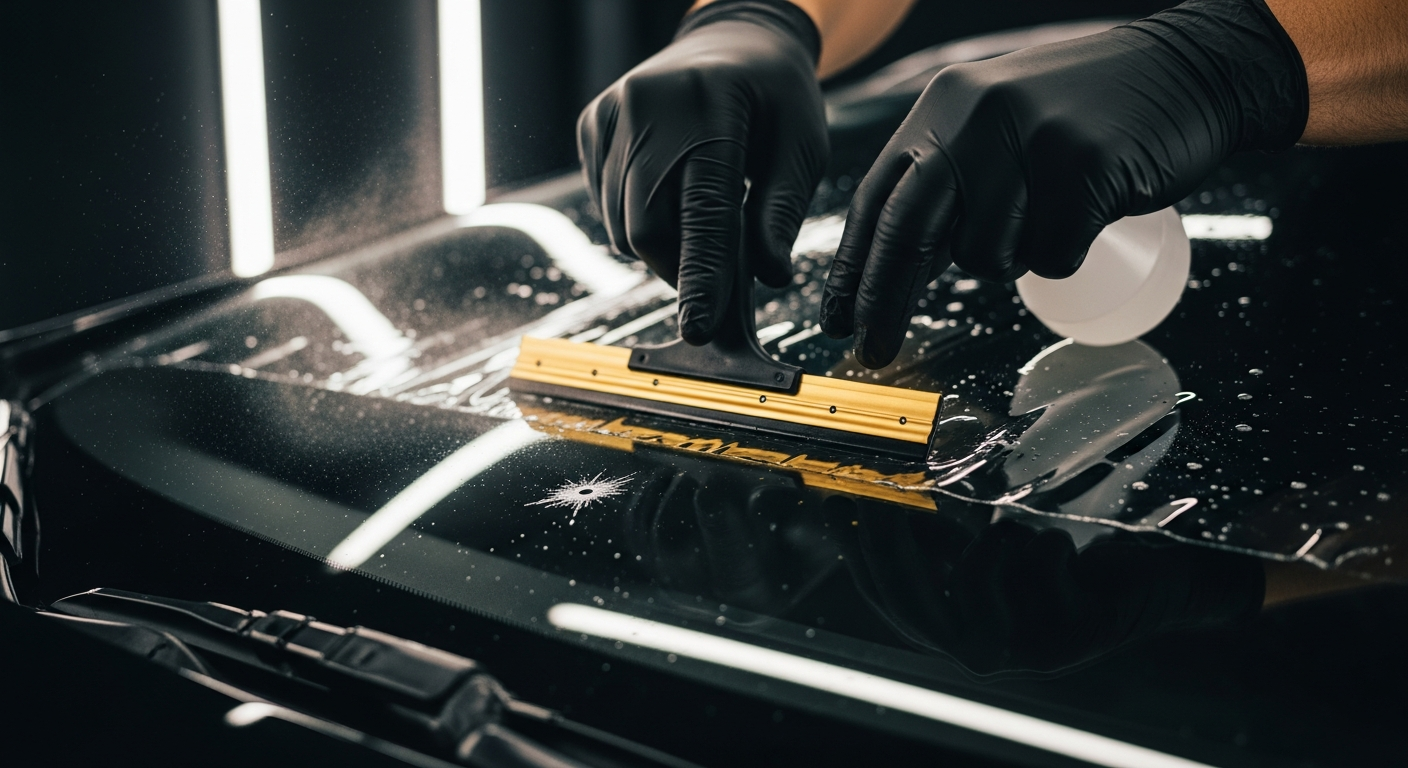
Windshield Rock Chips: What Alberta's Glass Endorsement Deletes
Alberta's approved auto policy deems missiles, falling or flying objects to be covered perils under Comprehensive. The approved AB-S.E.F. No. 13(D) endorsement removes glass from Comprehensive, where it is attached, unless the damage came from one of fourteen listed causes, and a stone is not one of them while hail is. What both editions of the form say, and the two Alberta inspection manuals that disagree by a millimetre.
Best PPF Installer Calgary: How to Choose in 2026
The complete guide to finding Calgary's best PPF installer. 10 critical criteria, red flags to avoid, and why Obsidian Auto leads with 705+ reviews.
The Complete Calgary PPF Guide: Protecting Your Car from Road Salt & Gravel (2026)
The definitive 3,000+ word guide to PPF in Calgary. Covers STEK vs 3M vs SunTek, pricing breakdowns, installation process, maintenance, and Calgary-specific protection needs.