
New EV Paint Protection in Calgary: Beyond Tesla
Quick answer: New EV paint protection matters more than it does on a gas car because most electric vehicles — Rivian, Lucid, Polestar, Cadillac Lyriq, the Hyundai/Kia E-GMP cars — ship with thin, soft water-based factory clear coats that chip and swirl far more easily than older solvent-based paint.
Key Takeaways
- New EV paint protection matters more than it does on a gas car because most electric vehicles — Rivian, Lucid, Polestar, Cadillac Lyriq, the Hyundai/Kia E-GMP cars — ship with thin, soft water-based factory clear coats that chip and swirl far more easily than older solvent-based paint.
- The best window to protect a new EV is the week you take delivery, before that first highway drive on Calgary's gravel-strewn, brine-soaked roads puts the first stone chip into a fresh, flawless finish.
- For a new EV in Calgary the strongest setup is paint protection film (PPF) on the high-impact panels for physical chip and salt protection, with a ceramic coating layered over the rest of the body for hydrophobics and easy winter washing — PPF first, ceramic second.
- Modern PPF is engineered to wrap around an EV's parking sensors, front cameras, and charge-port door without interfering with their function — a competent installer protects these areas rather than avoiding them.
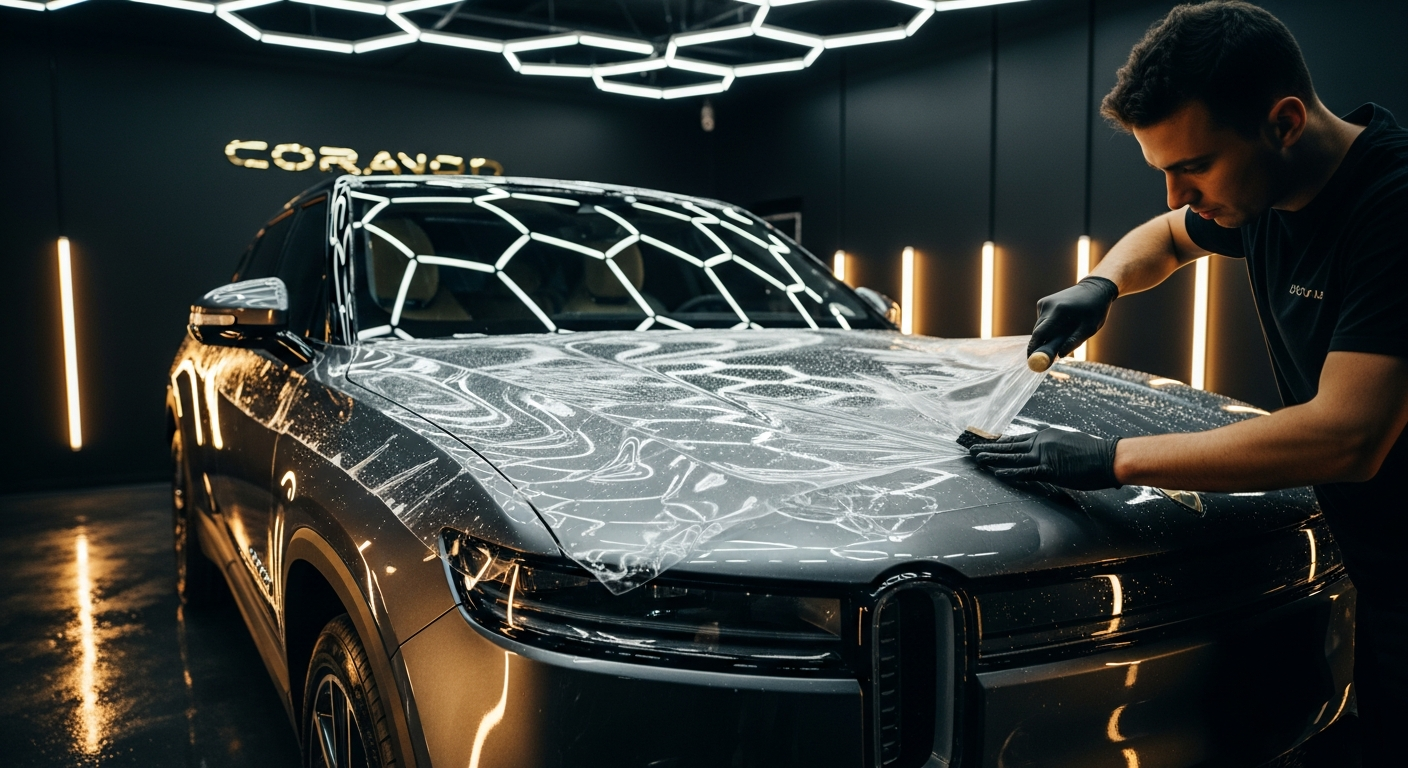
Tesla owners in Calgary have spent years warning each other about soft factory paint — but the rest of the EV world has quietly caught up. New EV paint protection is now a delivery-day conversation for Rivian, Lucid, Polestar, Cadillac Lyriq, Hyundai Ioniq and Kia owners too, because almost every one of these cars rolls off the truck with the same vulnerable, thin clear coat. In a city that runs gravel and brine for half the year, protecting that finish early is the difference between a flawless EV and one that looks chipped and swirled by its second winter.
The short answer: New EVs need paint protection more than comparable gas cars because most ship with thin, soft, water-based factory clear coats that chip and swirl easily. The strongest setup for a new EV in Calgary is paint protection film (PPF) on the high-impact panels for physical chip and salt protection, plus a ceramic coating over the body for hydrophobics and easy winter washing — installed in the first week of ownership, before that first highway drive puts a stone chip into perfect paint. PPF goes on first; ceramic goes on second.
This guide is the non-Tesla companion to our Tesla paint protection guide. If you have just taken delivery of a Rivian, Lucid, Polestar, Lyriq, Ioniq 5, EV6, i4, e-tron, or any of the new electric wave, here is exactly what your specific car needs — and why the clock starts the moment you drive it home.
Why New EV Paint Is Softer Than You Think
There is a reason the soft-paint reputation started with Tesla and then spread across the whole segment. To reduce solvent emissions and energy use in the paint shop, nearly every modern EV manufacturer has shifted to thinner, water-based clear coats. They are better for the environment and they cure beautifully — but they also cure softer than the older, thicker solvent-based finishes, which means they mar, swirl, and chip more readily. The Tesla forums simply documented it first; Rivian, Lucid, Polestar and the Hyundai-Kia E-GMP cars share the same fundamental trait. We break down exactly why EV clear coats chip so much more easily — from water-based paint to front-end geometry — in a dedicated guide.
Now layer on the things that make an EV uniquely hard on its own paint. Instant torque off the line flings gravel up at the rockers and rear arches. The battery pack adds several hundred kilograms of curb weight, loading the lower panels and tires that throw debris. And in Calgary, all of that happens on roads treated with calcium chloride brine and traction sand from October through April. A soft finish meeting a salted, gravel-strewn highway is the exact scenario PPF was invented for.
Why a New EV's Finish Is at Higher Risk (relative exposure we see in the studio)
The Non-Tesla EV Wave: Coverage by Model
The film is the same premium urethane on every car — what changes is where it goes. A heavy adventure SUV needs its rockers and arches protected; a long-hood luxury sedan needs the full hood and A-pillars. Here is how the high-impact map shifts across the EVs we see most in Calgary.
| EV | Body Style | Highest-Impact Zones | Coverage We Recommend |
|---|---|---|---|
| Rivian R1S / R1T | Adventure SUV / truck | Rockers, rear arches, lower doors, hood | Wrap + rocker + full front |
| Lucid Air | Luxury sedan | Long hood, fenders, A-pillars, mirrors | Full front + A-pillar wrap |
| Polestar 3 / 4 | Premium SUV / coupe-SUV | Hood, front bumper, lower doors | Full front, rocker option |
| Cadillac Lyriq | Large luxury SUV | Tall front fascia, hood, rockers | Full front + rockers |
| Hyundai Ioniq 5/6, Kia EV6/EV9 | Crossover / sedan | Bumper, hood, fender edges | Partial or full front |
| BMW i4/i5/iX, Audi e-tron, Merc EQ | Luxury EV | Hood, fenders, mirrors, sills | Full front + sills |
If you are weighing how far up the car to take the film, our breakdown of full-front versus full-body coverage walks through where the value curve flattens out. And for the bigger picture of which vehicles earn back their protection fastest, see which vehicles benefit most from PPF — EVs feature prominently for a reason.
PPF or Ceramic for a New EV? Both — In This Order
This is the single most common question new EV owners ask, and the honest answer is that the two products do completely different jobs. Treating them as either/or is how people end up under-protected.
Film Stops the Rock. Coating Sheds the Brine.
Paint protection film is a physical barrier — it is the only product that actually absorbs a stone chip before it reaches your soft EV clear coat. A ceramic coating is a chemical layer that makes the surface slick and hydrophobic, so brine and water spots release instead of bonding. PPF protects; ceramic maintains. On a new EV, the premium build is PPF on the impact panels first, then ceramic over the body — including over the film — second.
The Pros
- DO film the high-impact panels (bumper, hood, fenders, mirrors, rockers) — PPF is the only thing that physically stops a rock chip on soft EV paint.
- DO layer a ceramic coating over the rest of the body and over the film for hydrophobics and fast winter washing.
- DO protect within the first week of ownership, before the first highway drive chips perfect paint.
- DO have the installer map coverage to your specific EV model rather than a generic pattern.
The Cons
- DON'T assume a ceramic coating alone will stop rock chips — it makes washing easier but offers no physical impact protection.
- DON'T wait until after a season of driving — film seals in chips and swirls; it cannot reverse them.
- DON'T let anyone install film over uncorrected, swirled paint — decontaminate and correct first.
- DON'T skip the rockers and lower doors on a heavy EV — that is exactly where Calgary gravel and brine concentrate.
For the deeper chemistry of why a coating shrugs off brine and water spotting, our guide on graphene versus ceramic coatings covers which formulation survives a Calgary winter best, and our ceramic coating service page details the packages we offer for EVs.
EV-Specific Install Considerations
An EV is not just a quiet gas car — it has features that a thoughtful installer protects rather than works around. Here is what we account for on every electric vehicle that comes through the studio. If you want the evidence behind the sensor handling below, we go deep on whether film actually interferes with radar, ultrasonic sensors and cameras in a companion guide.
Sensors & Front Camera
Detail 1Optically clear film lets parking sensors, radar, and the forward camera behind the badge or windshield keep reading. We relieve and align the film so nothing is obscured.
Charge-Port Door
Detail 2One of the most-touched, most scratch-prone spots on the car. We wrap cleanly around the surround so the door still opens, closes, and seals — and protect it from fingernail and cable scuffs.
Frunk & Aero Panels
Detail 3EVs add a front trunk and flush aero trim. We protect the frunk lip and leading edges that catch debris without disrupting the panel gaps EV owners notice.
Soft-Paint Prep
Detail 4Because the clear coat is soft, paint correction and decontamination are done gently and thoroughly before any film goes down, so we never trap a swirl under the protection.
The underbody deserves the same attention. EVs are not immune to corrosion — subframes, fasteners, and brake hardware still rust in a brine climate. Our companion guide on EV-safe undercoating and salt protection covers protecting everything the film does not reach. Film standards and self-healing topcoats are set by the premium brands we install — STEK, 3M, and SunTek — whose urethane is engineered to absorb the exact gravel impacts Calgary highways deliver.
Timing: Protect Before the First Calgary Winter
The most expensive mistake we see is waiting. A new EV that arrives in summer feels invincible — and then October brings the first brine, the first gravel-treated highway, and the first stone chip in a hood you cannot un-chip. The City of Calgary publishes exactly how aggressively it treats winter roads on its snow and ice control program page, and every one of those treatments ends up on your paint. Protecting a new EV in the delivery window — or at minimum before the first winter — means the film and coating are already doing their job when the salt trucks roll out.
Just Took Delivery of a New EV?
Bring your Rivian, Lucid, Polestar, Lyriq, Ioniq or any new electric vehicle to our Calgary studio before its first real drive. We will map the high-impact panels, protect the sensors and charge port properly, and have it filmed and coated before the first stone chip ever happens.
Book Your EV ProtectionWhat It Costs to Protect a New EV
Coverage drives the price. High-impact partial-front film — full bumper, partial hood and fenders, mirrors — is the highest-value entry point, while full-front and full-body coverage leave progressively less exposed. Larger, heavier EVs such as a Rivian R1S or a three-row Lyriq take more film and install time than a compact sedan. The honest way to get a real number is a quick walk-around of your exact model; our transparent PPF pricing breakdown shows where each tier lands, and our paint protection film service details exactly what each package includes for electric vehicles.
Ready to Protect Your Vehicle from Rock Chips?
Join 705+ Calgary drivers who trust Obsidian Auto for PPF installation
Serving Calgary and surrounding areas • Free Uber shuttle with every service
Frequently Asked Questions
Ready to Protect Your Vehicle?
Get a quote from Calgary's most trusted detailing studio. We use only the best materials and back our work with industry-leading warranties.
Get A QuoteRelated Intelligence
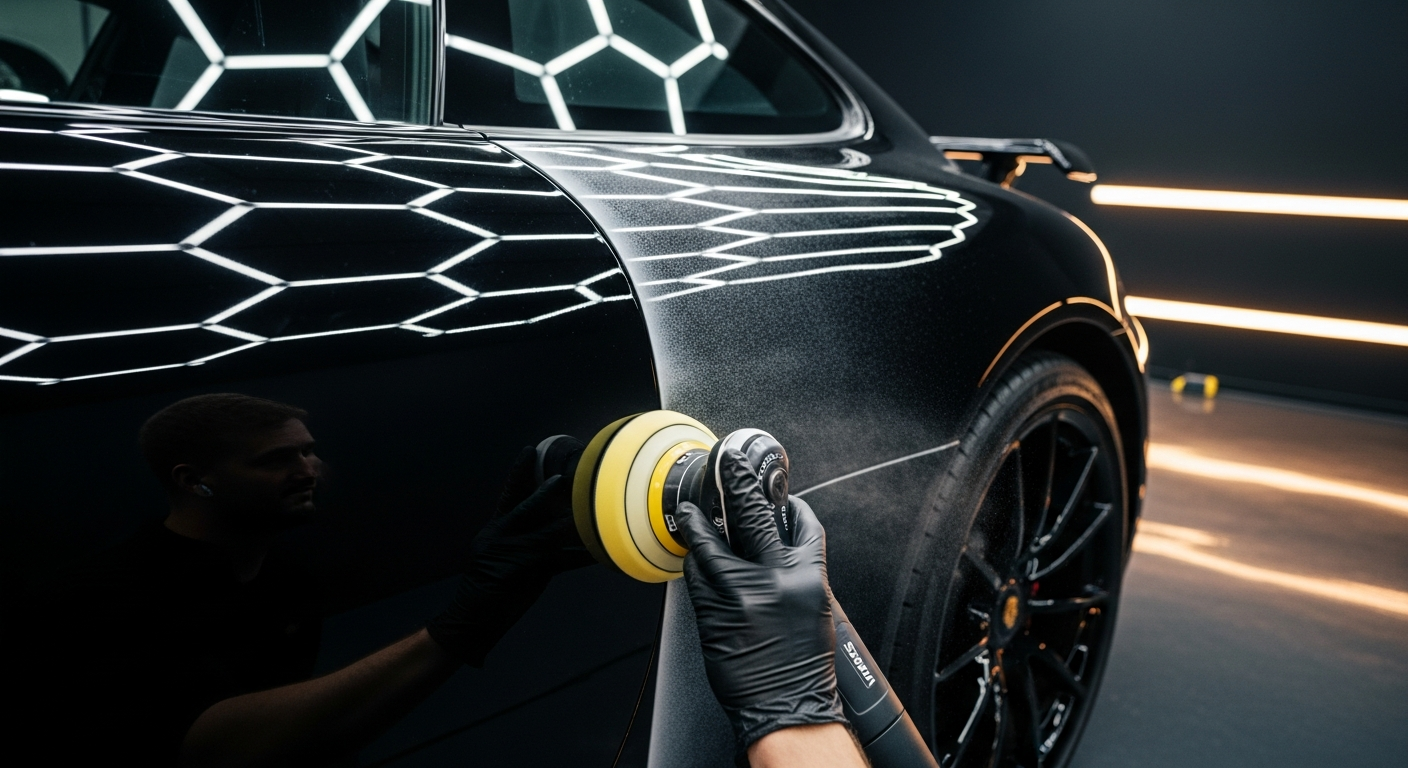
Paint Correction in Calgary: Single vs Multi-Stage Polishing Explained (2026)
The honest breakdown of single-stage vs multi-stage paint correction in Calgary — what each removes, what each costs in 2026, and how to choose before a ceramic coating or PPF install.
Does PPF or Ceramic Coating Void Your Warranty in Canada?
Six of the top fifteen pages answering this cite the US Magnuson-Moss Act, which has no force in Alberta. What the Tesla, Mercedes-Benz and Toyota Canada booklets actually say, why your paint warranty already excluded stone chips by name, and the free arbitration route that quietly shuts the door on any car carrying aftermarket film.
Best PPF Installer Calgary: How to Choose in 2026
The complete guide to finding Calgary's best PPF installer. 10 critical criteria, red flags to avoid, and why Obsidian Auto leads with 705+ reviews.