Ceramic vs. Dyed Window Tint: Performance Data That Proves the Difference
Quick answer: Ceramic tint rejects 50–65% of solar heat compared to 15–25% for dyed film — the difference is measurable in cabin temperature and A/C efficiency. Dyed film fades from black to purple/brown over 3–5 years as UV degrades the dye — ceramic maintains its colour and performance for 10+ years.
Key Takeaways
- Ceramic tint rejects 50–65% of solar heat compared to 15–25% for dyed film — the difference is measurable in cabin temperature and A/C efficiency.
- Dyed film fades from black to purple/brown over 3–5 years as UV degrades the dye — ceramic maintains its colour and performance for 10+ years.
- Ceramic tint costs 2–3x more upfront but lasts 2–3x longer — the lifetime cost per year is roughly equal, with dramatically better performance.
- For Calgary's sustained UV (2,400+ sun hours per year) and -40°C winters, ceramic is the only film technology that performs consistently year-round.
Is ceramic tint worth it over dyed? Yes — ceramic window tint costs more up front but rejects far more infrared heat (~90–99% vs ~10–40%), holds its colour for a decade, and blocks 99% of UV, while cheaper dyed film fades to purple in 3–5 years. Here is the 2026 performance data behind that verdict.
How Each Film Type Works
Dyed Film: Absorption
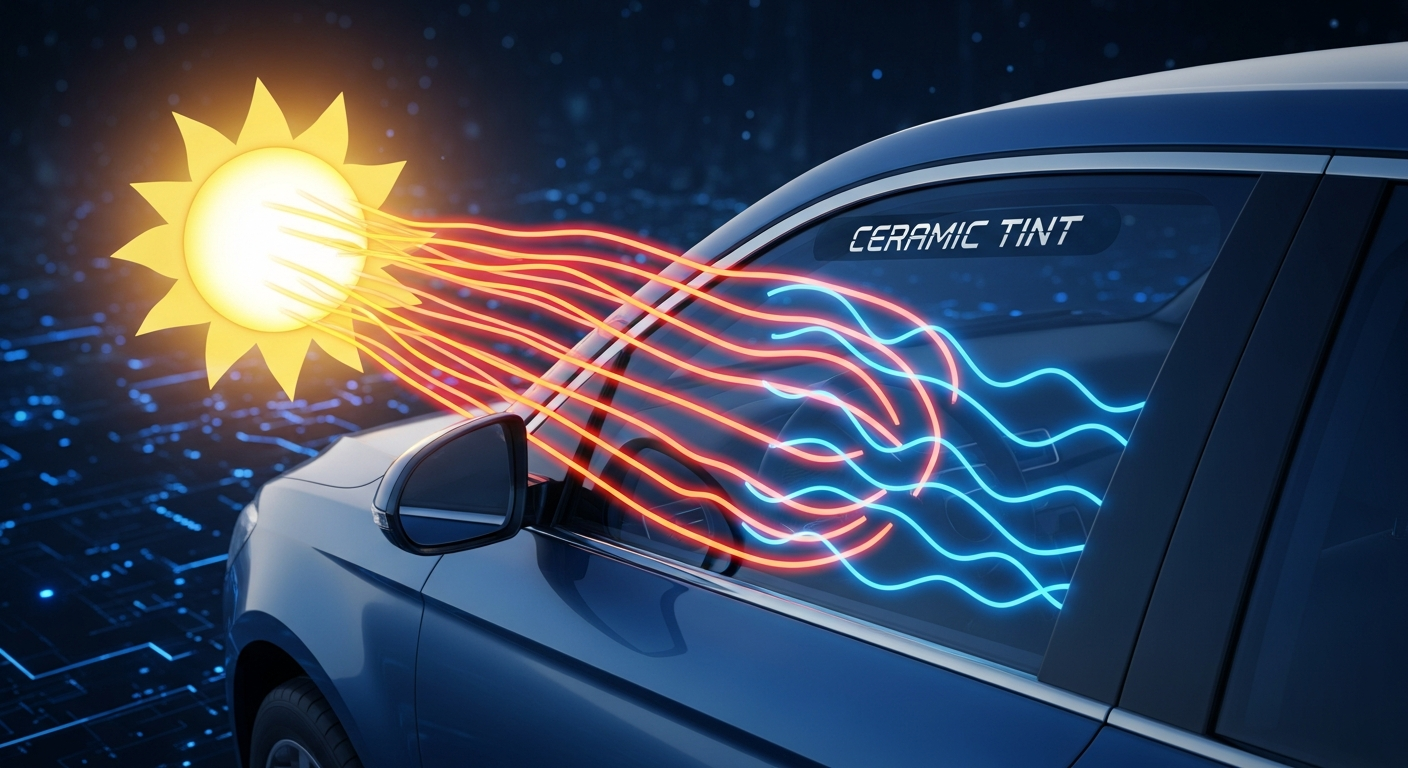
A layer of coloured dye absorbs visible light — making the window appear darker. But absorbed energy converts to heat within the film itself, which then radiates into the cabin. Dyed film makes your car look cool but does less to keep it cool. Think of it like wearing a black t-shirt in the sun — it blocks light but gets hot.
Ceramic Film: Reflection (Recommended)
Nano-ceramic particles embedded in the film reflect infrared (heat) radiation before it enters the vehicle. The film stays cool, the cabin stays cool, and UV is blocked at 99%. Think of it like wearing a high-tech running shirt — breathable, cool, and protective simultaneously.
Performance Comparison (at 35% VLT)
| Performance Metric | Dyed Film | Carbon Film | Ceramic Film | Metallic Film |
|---|---|---|---|---|
| Total Solar Energy Rejected | 15–25% | 30–45% | 50–65% | 35–50% |
| Infrared Heat Rejection | 5–15% | 25–40% | 60–80% | 40–55% |
| UV Rejection | 95% | 99% | 99% | 98% |
| Visible Light Reduction | High (main mechanism) | Moderate | Low (rejects heat, not light) | Moderate |
| Signal Interference | None | None | None | Yes (phone, GPS, radio) |
| Colour Stability | 3–5 years | 7–10 years | Lifetime | 7–10 years |
| Typical Lifespan | 3–5 years | 7–10 years | 10–15+ years | 7–10 years |
| Cost (Full Vehicle) | $150–$250 | $250–$400 | $350–$600 | $300–$450 |
Heat Rejection: The Real-World Difference
Cabin Temperature Reduction — July in Calgary (35°C Ambient)
After 1 hour parked in direct sun, a ceramic-tinted vehicle's cabin is 15°C cooler than an untinted vehicle. Dyed tint provides only 5°C reduction — barely noticeable.
The Purple Problem: Dyed Film Degradation
Every dyed film eventually turns purple. UV radiation breaks down dye molecules, shifting the colour from black through purple to brown. This timeline depends on UV exposure — and Calgary receives roughly 2,400 hours of bright sunshine annually — the most of any large Canadian city — accelerating the degradation. Here is the typical progression:
Lifetime Cost Comparison
| Cost Factor | Dyed Film (10 Years) | Ceramic Film (10 Years) |
|---|---|---|
| Initial cost | $200 | $500 |
| Replacement at year 4 | $200 (+ removal $75) | $0 |
| Replacement at year 8 | $200 (+ removal $75) | $0 |
| Total over 10 years | $750 | $500 |
| Cost per year | $75/year | $50/year |
| Heat rejection received | Poor (degrades over time) | Excellent (consistent) |
The Alberta Legal-Tint Angle
You Only Get to Tint the Rear — Make It Count
In Alberta, aftermarket film is not permitted on the front side windows or the windshield (aside from a light strip above the AS-1 line, plus medical exemptions). Your legal canvas is the rear side windows and rear windshield — with no darkness limit there. Since that glass can only be tinted once within the rules, the durability gap matters more than ever: dyed film on your rear glass will still fade to purple and need stripping and re-doing, while colour-stable ceramic stays true for a decade. Choosing ceramic on legal rear glass is the future-proof call.
Invest once in ceramic tint. Contact Obsidian Auto for professional ceramic window tinting with manufacturer warranty. Check our pricing guide for transparent costs and explore why we're considered the best window tinting shop in Calgary.
Stay Cool and Protected This Summer
Join 705+ Calgary drivers who trust Obsidian Auto for window tinting
Serving Calgary and surrounding areas • Free Uber shuttle with every service
Frequently Asked Questions
Sources
External references used in this guide
Ready to Protect Your Vehicle?
Get a quote from Calgary's most trusted detailing studio. We use only the best materials and back our work with industry-leading warranties.
Get A QuoteRelated Intelligence
PPF vs Ceramic Coating in Calgary: Which Protection Does Your Car Need?
The battle of protection. Do you need impact resistance or gloss? We explain why the "Halo Package" (both) is the ultimate solution.
Colored PPF vs. Vinyl Wrap: Which Is Better for a Color Change in Calgary?
Why new 8-mil Colored PPF is replacing vinyl. Real rock chip protection with zero orange peel.
Ceramic Coating vs PPF: Which is Right for Your Calgary Vehicle? (2026)
Complete comparison guide covering costs, protection levels, when to choose each, and why the combination provides ultimate protection. 2,500+ words of expert analysis.